Excerpt: Millions of Americans were exposed. Most still have no idea. Are you one of them?
Wrong excerpt here’s the correct one:
Excerpt: Every photo you upload, every video you stream, every message you send is consuming space that is running out faster than anyone is admitting. Here’s what happens when it’s gone.
You uploaded a photo this morning. Sent a few messages. Streamed something on Netflix tonight. Completely normal. Completely invisible.
What’s less visible is what happened on the other end. Those photos landed on a server somewhere. Those messages traveled through cables thicker than your arm running across ocean floors. That Netflix stream pulled data from a warehouse-sized building filled with humming machines consuming enough electricity to power a small city.
We are creating 2.5 quintillion bytes of data every single day. That number is so large it has essentially stopped meaning anything to most people. Which is exactly why nobody is talking seriously about what happens when the infrastructure holding all of it starts buckling under the weight.
It’s already starting. And the consequences are coming for everyone.
The Scale of the Problem
The internet doesn’t live in the cloud. The cloud is a marketing term for other people’s computers physical servers, physical cables, physical buildings consuming physical resources at a scale most people never visualize.
Right now there are over 8,000 data centers operating across the United States alone. Globally that number exceeds 10,000. These facilities consume approximately 200 terawatt-hours of electricity annually roughly 1% of global electricity consumption, a figure that is accelerating rapidly as AI workloads, video streaming, and cloud storage demands compound simultaneously.
The problem isn’t one single crisis point. It’s four simultaneous pressures converging at once.
Pressure 1: Physical Storage Is Hitting Real Limits
Hard drives and solid-state storage have expanded dramatically over the past two decades. But data creation is outpacing storage manufacturing capacity at an accelerating rate.
By 2025, humanity had generated more data in the previous two years than in all of prior recorded history combined. The trajectory doesn’t flatten it steepens. AI model training alone consumes petabytes of storage per model. Every major tech company training next-generation AI simultaneously is placing unprecedented strain on global storage supply chains.
The result: storage costs that had been declining for decades have begun rising again for the first time a signal that supply is genuinely struggling to keep pace with demand.
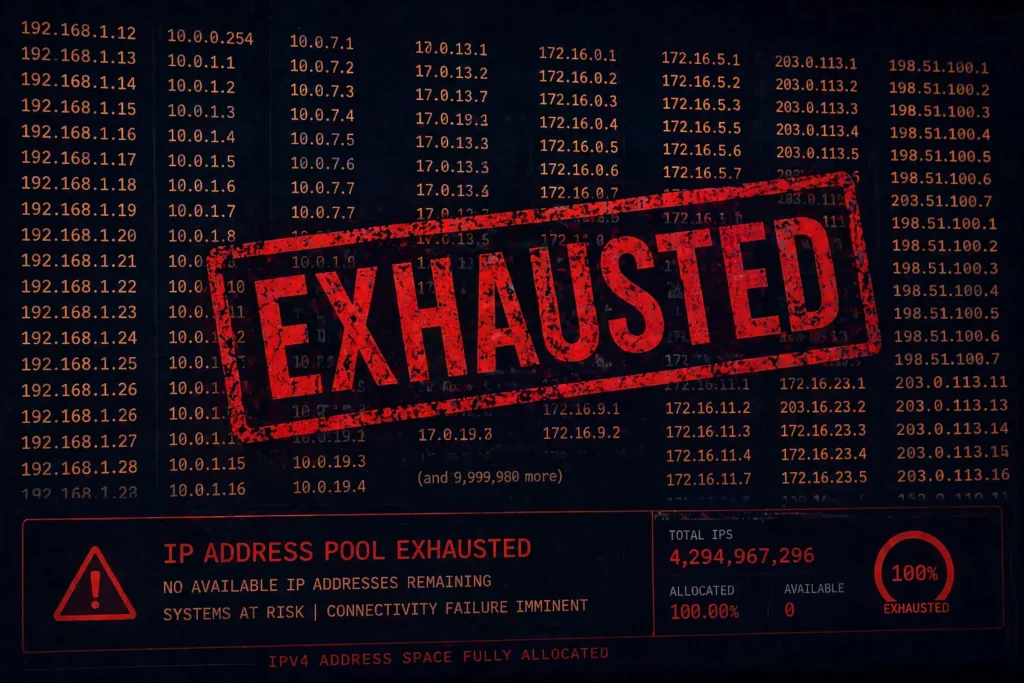
Pressure 2: The IP Address Crisis Is Already Here
Every device connected to the internet needs an address an IP address to send and receive data. The original internet addressing system, IPv4, provided approximately 4.3 billion unique addresses. That sounds like a lot. It isn’t.
IPv4 addresses ran out in 2011. The world has been operating on workarounds ever since — network address translation systems that allow multiple devices to share single addresses, creating inefficiencies and security vulnerabilities baked into the infrastructure of the modern internet.
The solution IPv6 provides a virtually unlimited address space. But transitioning the entire global internet to IPv6 has been moving at a pace described by networking engineers as “dangerously slow.” Less than 50% of global internet traffic currently travels over IPv6. The remainder is still running on an addressing system that officially ran out of space fifteen years ago.
Pressure 3: Subsea Cable Capacity Is Straining
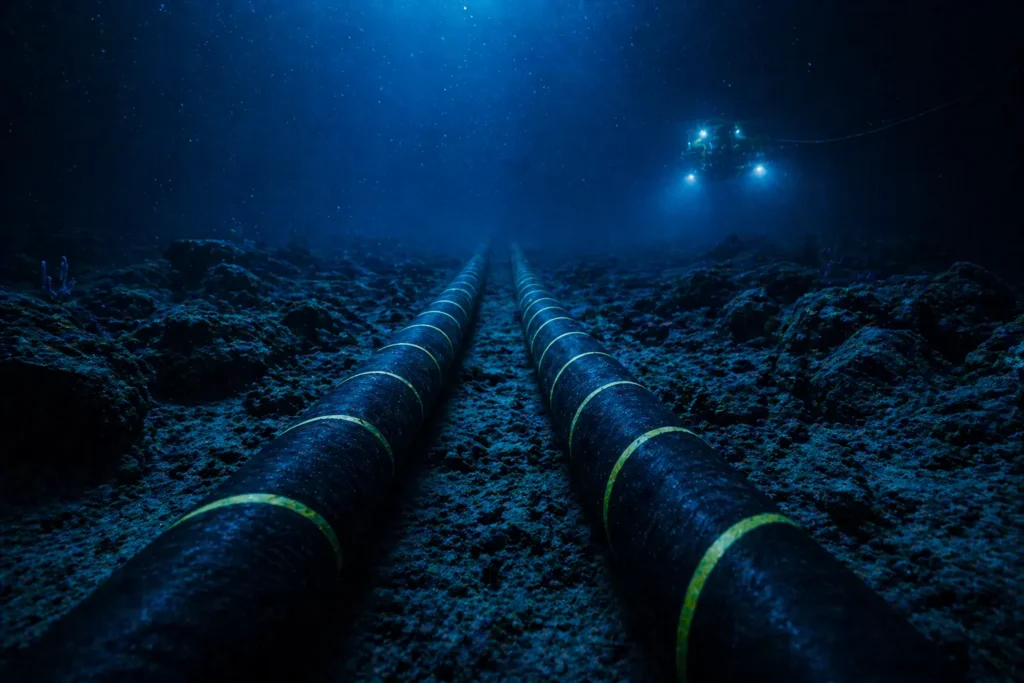
95% of all international internet traffic travels through undersea fiber optic cables not satellites, despite what most people assume. There are over 400 of these cables running across ocean floors globally, representing the literal physical backbone of the international internet.
These cables have finite capacity. And demand for international bandwidth is doubling approximately every two years.
New cables are being built largely funded by Google, Meta, and Microsoft, who now own or co-own significant portions of global subsea infrastructure. But construction timelines run 3–5 years from planning to activation, creating windows where demand outpaces available capacity. When those windows occur the effects are real: slower international connections, increased latency, and higher costs passed to consumers and businesses.
Pressure 4: AI Is Consuming Everything
This is the pressure that accelerated every other problem simultaneously.
Generative AI changed the internet’s resource consumption overnight. A single ChatGPT query consumes approximately 10 times the energy of a standard Google search. Every AI image generated, every AI video rendered, every large language model trained all of it runs on the same physical infrastructure that was already under strain before AI became mainstream.
Microsoft, Google, and Amazon have all announced emergency data center expansion programs investments running into hundreds of billions of dollars specifically in response to AI demand overwhelming their existing capacity. These aren’t long-term strategic investments. They are emergency responses to infrastructure hitting real limits right now.
What Actually Happens Next
The internet is not going to simply switch off. But the experience of using it is already changing and will change more dramatically over the coming years.
Costs will rise. Cloud storage pricing, streaming subscription costs, and data plan rates are all positioned to increase as infrastructure costs climb. The era of essentially free unlimited digital storage is ending.
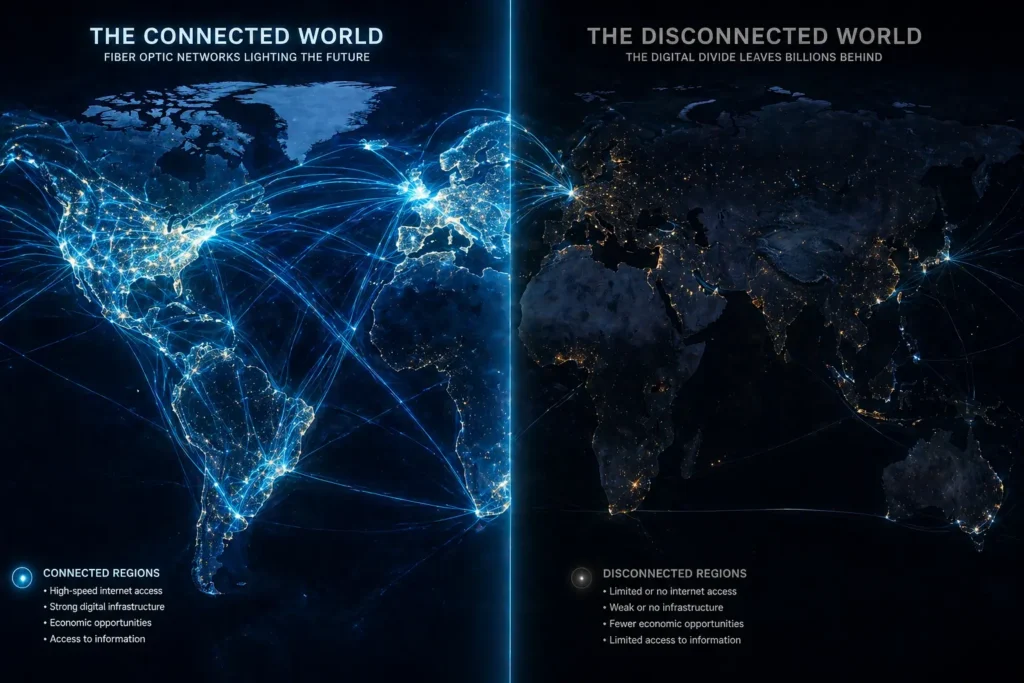
Speed will become unequal. Nations and regions investing aggressively in next-generation infrastructure fiber networks, IPv6 transition, new data centers will experience dramatically faster, more reliable internet than those that don’t. The digital divide between countries is about to widen significantly.
Data prioritization will become visible. Network neutrality debates will intensify as providers face genuine capacity constraints and begin making explicit decisions about which traffic gets priority bandwidth. Your video call, your competitor’s video call, and a hospital’s remote surgery connection cannot all be equal priority when capacity is genuinely scarce.
AI will consume an increasing share of everything. Without significant intervention, projections suggest AI workloads could consume up to 20% of global electricity by 2030 pulling resources away from every other use of the internet simultaneously.
What You Can Do
Individual action won’t solve infrastructure-scale problems. But understanding what’s coming allows smarter personal decisions.
Audit your cloud storage. Services like Google Photos, iCloud, and Dropbox are moving toward paid tiers as free storage becomes economically unsustainable. Consolidate now before pricing escalates further.
Understand your data footprint. Streaming video in 4K consumes 20 times the bandwidth of standard definition. AI tools consume resources invisibly at a scale most users never consider. Awareness changes consumption behavior.
Pay attention to infrastructure policy. The decisions being made right now by governments and corporations about data center locations, energy sources, IPv6 transition timelines, and subsea cable investments will determine the internet experience of the next decade.
The internet didn’t become the most transformative infrastructure in human history by accident. It became that because people built it, funded it, regulated it, and expanded it deliberately.
What happens next depends on whether the same deliberate attention gets applied to its limits before those limits apply themselves.
The space isn’t infinite. It never was. And the bill for pretending otherwise is coming due.
📌 Read Also:
- Your iPhone Is Watching You More Than You Think
- America’s Biggest Data Breach of 2026 — What Was Stolen and Are You Safe?
© AiwalaNews | Global Tech & Privacy Edition | April 2026
