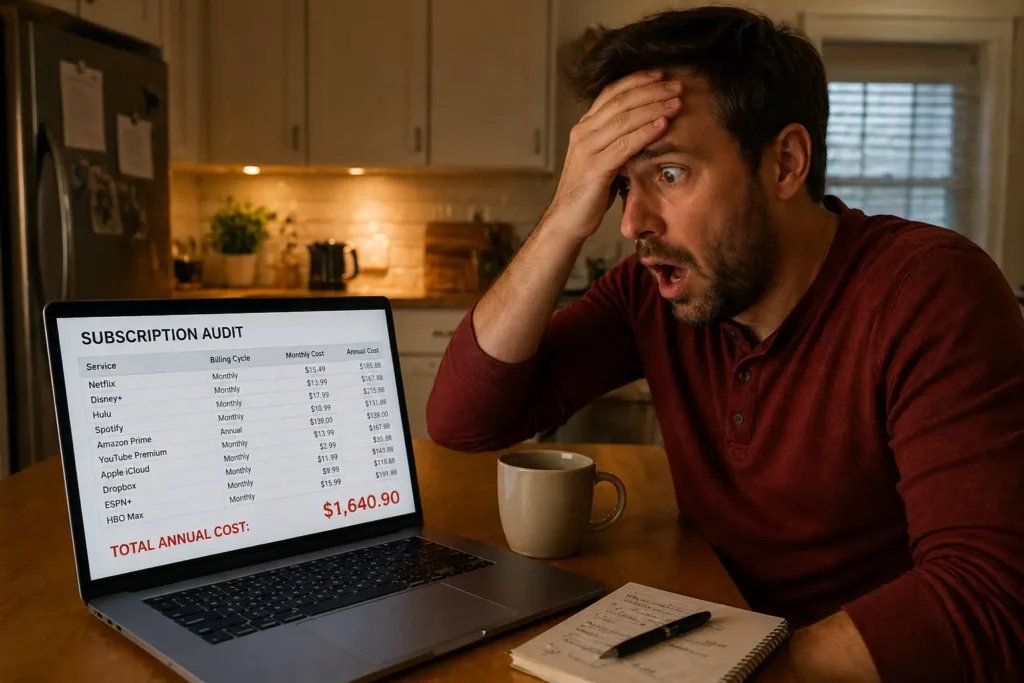
It started with one cancellation.
Maybe it was the streaming service you hadn’t opened in three months. Maybe it was the meal kit boxes stacking up in your fridge uneaten. Maybe it was the moment you actually added up every recurring charge hitting your bank account monthly and felt genuinely sick at the number staring back at you.
Whatever triggered it millions of Americans are canceling their subscriptions in 2026 at a rate that is genuinely alarming the companies that built their entire business models around you never leaving.
This is not a trend. This is a reckoning. And it’s been building for years.
How America Got Hooked on Subscriptions
Ten years ago, subscriptions were simple. Netflix was $8. Spotify was $10. Maybe a gym membership. The total was manageable, the value was obvious, and the convenience was genuinely revolutionary.
Then every company on earth discovered the subscription model simultaneously.
Your razor. Your dog food. Your vitamins. Your news. Your cloud storage. Your antivirus. Your meditation app. Your parking spot. Your car’s heated seats.
That last one is real. Multiple automakers including BMW and Toyota have experimented with subscription fees for features physically built into cars their owners already purchased. Heated seats you paid for, locked behind a monthly charge.
This is the moment the subscription economy revealed its true nature and Americans started paying attention.
The Number That’s Waking People Up
Here’s the calculation that is spreading across social media, Reddit threads, and family dinner conversations across America in 2026:
The average American household now spends $1,100 per month on subscriptions.
Not $50. Not $200. Over one thousand dollars every single month on recurring charges many of which are forgotten, duplicated, or actively resented by the people paying them.
A 2025 survey by C+R Research found that Americans underestimate their monthly subscription spending by an average of 250%. When asked to guess their monthly total before seeing their actual bank statements, most people guessed around $80. The real number averaged $219 for individuals and significantly higher for households with multiple family members sharing accounts across multiple services.
The gap between what people think they’re spending and what they’re actually spending is where the subscription economy makes its real money.
The Five Triggers Driving Mass Cancellations
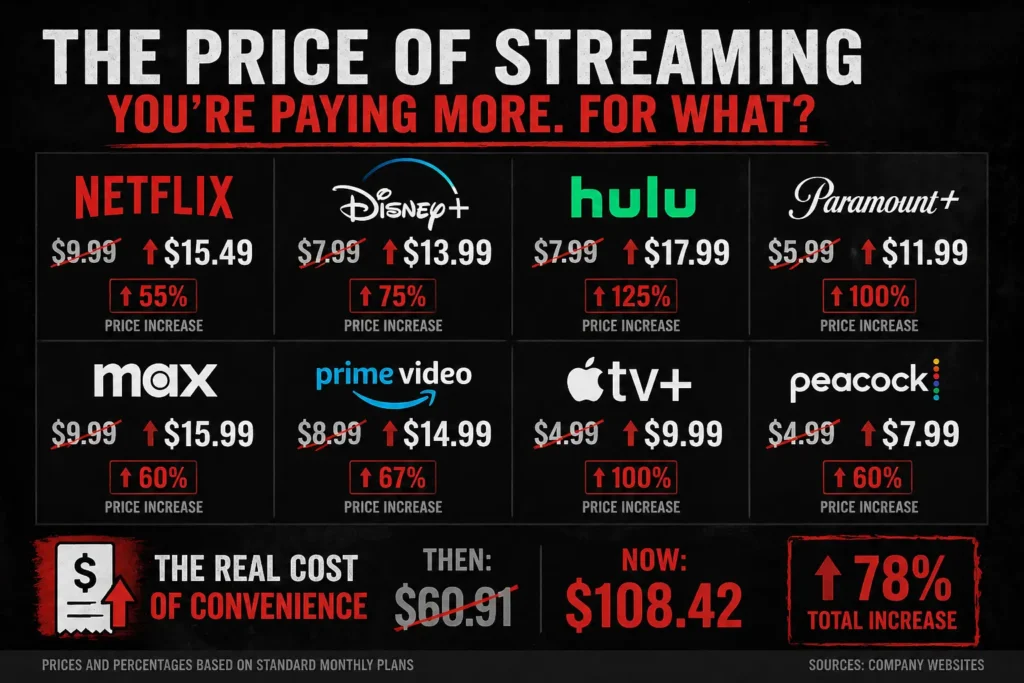
Price hikes that crossed a psychological line. Netflix, Disney+, Hulu, Spotify, YouTube Premium, Apple One virtually every major subscription service raised prices between 2023 and 2025, many of them multiple times. Netflix alone has raised its prices six times since 2019. Each individual increase felt small. The cumulative effect has been a near-doubling of costs for consumers who simply kept paying without noticing.
The end of password sharing. When Netflix cracked down on password sharing in 2023, it forced millions of Americans to make an active decision about whether the service was worth paying for individually. Millions decided it wasn’t. That moment of forced reconsideration became a template consumers started applying the same logic to every subscription they held.
Ad-supported tiers that feel like a broken promise. The implicit contract of a streaming subscription was simple: pay money, get content without ads. Every major platform has now introduced cheaper ad-supported tiers while simultaneously degrading the ad-free experience to push subscribers downward. Americans who remember paying $8 for genuinely ad-free Netflix are now paying $22 for the same promise and feeling manipulated.
The content quality collapse. Subscription fatigue is inseparable from content fatigue. Multiple streaming services have dramatically reduced content quality and quantity as the economics of original programming have proven unsustainable at scale. When the content stops justifying the cost cancellation becomes rational.
Economic pressure meeting clearer eyes. Inflation, high interest rates, and housing costs have forced millions of American households to examine every line of their budget with new seriousness. Subscriptions invisible by design became visible for the first time. And what people saw when they looked clearly made the cancellation decision easy.
The Apps Helping Americans Fight Back
A cottage industry of subscription management tools has emerged to help Americans identify and cancel what they’re paying for:
Rocket Money formerly Truebill scans your bank statements and credit card charges to identify every recurring subscription, categorizes them, and can cancel unwanted ones on your behalf. Over 3 million Americans use it actively.
Trim operates similarly, negotiating bills and identifying forgotten charges automatically.
Apple’s App Subscription Manager buried in Settings → Apple ID → Subscriptions — shows every subscription tied to your Apple ID in one place. Most iPhone users have never opened it. Those who do are consistently shocked by what they find.
The most powerful tool, however, is the simplest one: open your bank statement and your credit card statement side by side. Highlight every recurring charge. Add them up. The number will motivate everything else.
What the Companies Are Doing to Stop You
The subscription industry did not build billion-dollar businesses by making cancellation easy. And in 2026 they are fighting back against mass cancellation with sophisticated retention tactics:
Pause options “don’t cancel, just pause for three months” designed to interrupt the cancellation momentum and allow the habit to reassert itself.
Aggressive win-back offers discounted rates offered the moment you attempt to cancel that are frequently better than any deal available to new subscribers. The loyal paying customer gets the worst price. The person leaving gets the best one.
Deliberately complicated cancellation flows multiple confirmation screens, emotional language about what you’ll lose, hidden cancellation buttons, and in some cases requirements to call a phone number during business hours rather than canceling online.
The FTC has taken notice. In 2024, the agency finalized its “click to cancel” rule requiring companies to make cancellation as easy as signup. Implementation has been slow and legal challenges from subscription companies have delayed enforcement significantly.
The Subscription Audit – Do This Today
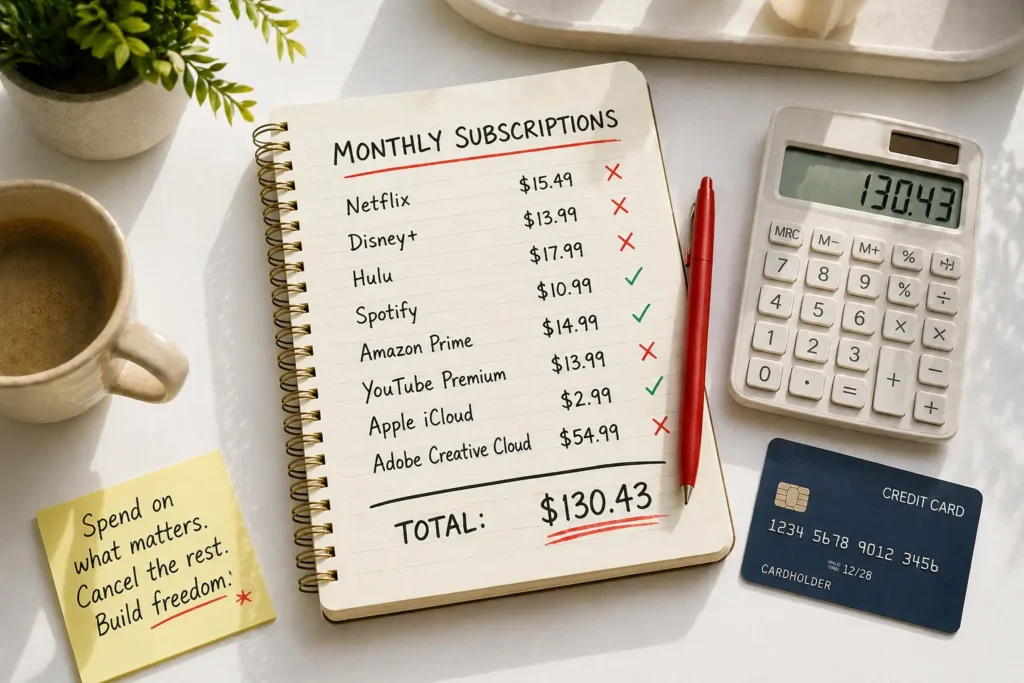
Step 1: Pull your last two months of bank and credit card statements. Highlight every recurring charge regardless of size.
Step 2: Categorize each one: actively used in the last 30 days, occasionally used, or not used at all.
Step 3: For everything in the “not used” category cancel today. Not tomorrow. Today. The average American has 3–5 forgotten subscriptions running at any given time.
Step 4: For “occasionally used” subscriptions ask honestly whether the cost matches the value. If the answer requires justification, cancel it.
Step 5: Set a calendar reminder every 90 days to repeat this audit. Subscriptions accumulate silently. The audit has to be a habit, not a one-time event.
What This Means for the Economy
The mass cancellation movement isn’t just a personal finance story. It’s an economic signal.
The subscription model worked beautifully when it was new, when prices were low, and when consumers were too busy or too comfortable to scrutinize recurring charges. All three of those conditions have changed simultaneously.
Companies built on subscription revenue are facing a structural reckoning forced to justify their value proposition month after month to consumers who are no longer giving them the benefit of the doubt. The ones that genuinely deliver value will survive and strengthen. The ones that relied on inertia and consumer inattention are already feeling the cancellations compound.
For American consumers, the reckoning arrives as something that feels surprisingly like power.
For years, the subscription economy was designed around your inattention.
In 2026, Americans finally started paying attention.
📌 Read Also:
- Why Americans Are Deleting Their Apps and Going ‘Digital Minimal’
- I Tried the 50/30/20 Budget Rule for 6 Months — Here’s What Actually Happened
© AiwalaNews | Global Tech & Privacy Edition | April 2026
