This article is based on Oura’s published Health Radar documentation, CNBC’s verified reporting on Oura Ring 5, peer-reviewed research, and TechRadar’s 2026 smart ring testing analysis. This is for informational purposes not medical advice. Consult a qualified healthcare professional for health concerns.
You feel fine. You have no symptoms. Nothing feels off. But the ring on your finger has been quietly running calculations for the past six hours and it noticed something your body hasn’t told you yet.
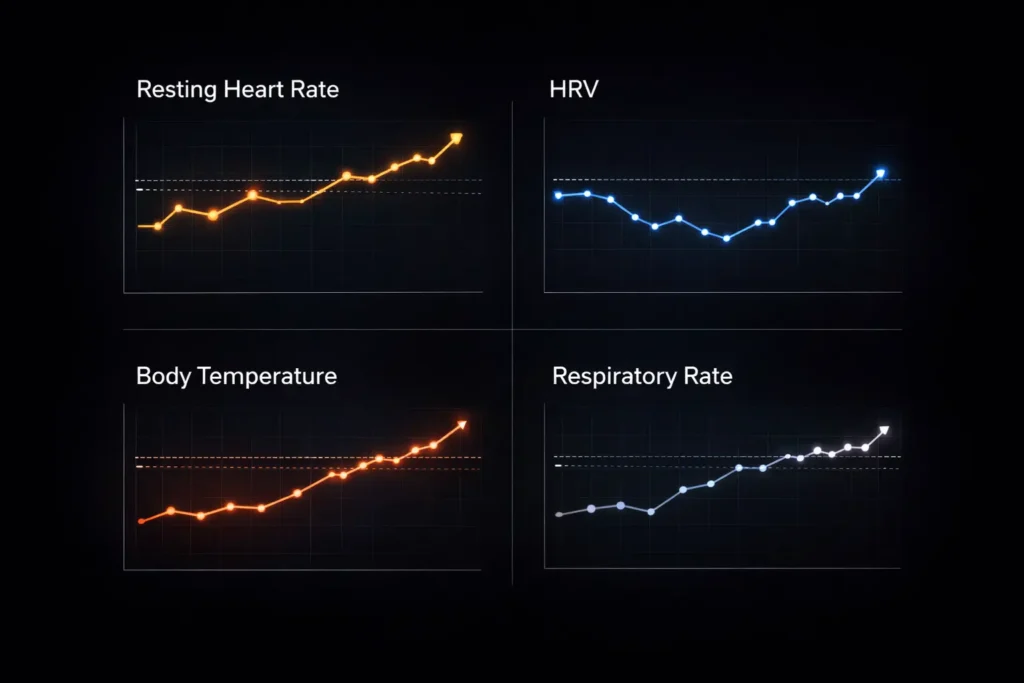
Your resting heart rate is 4 beats per minute higher than your 30-day baseline. Your body temperature rose 0.4 degrees Celsius overnight. Your heart rate variability dropped 18% below your personal average. Your respiratory rate increased by 2 breaths per minute while you slept.
None of these individually means much. Together, they form a pattern the AI has seen before the physiological signature of an immune system preparing to fight something. Three days before you feel sick.
This is what smart rings do in 2026. And the science behind it is more rigorous than most people expect.
The Hardware: What’s Actually Inside the Ring
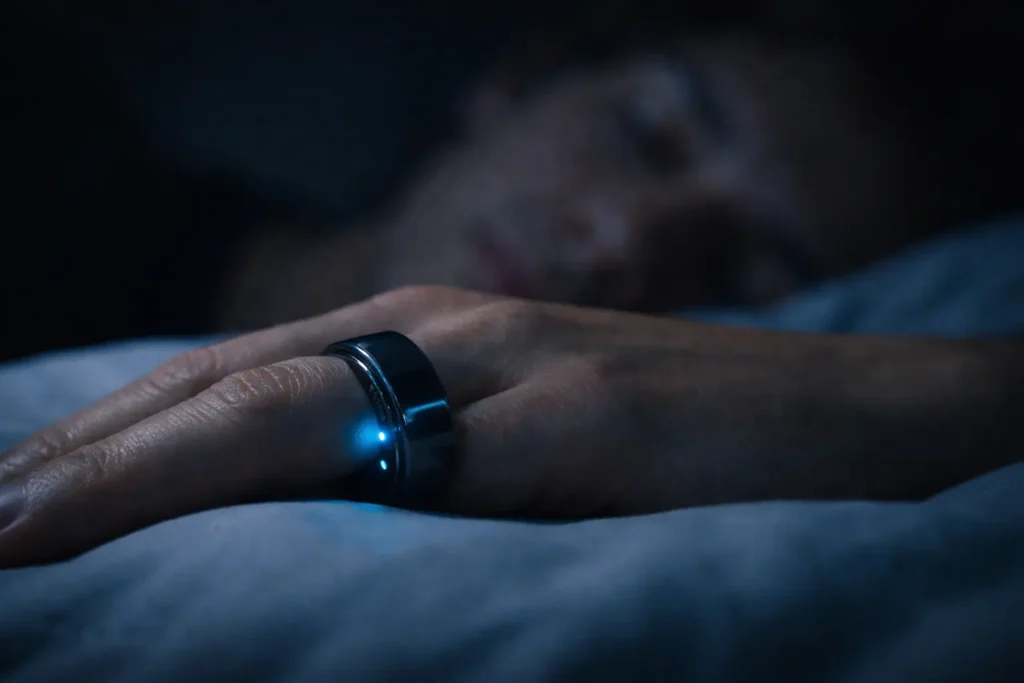
The Oura Ring operates based on infrared LEDs. Light from the LEDs is reflected through the skin and the changes in the reflection are analysed by an algorithm developed by the company. The ring collects activity, heart rate, body temperature, respiratory rate, and sleep data, transmitting it wirelessly via Bluetooth to a smartphone app.
The finger is a significantly better location for biometric sensing than the wrist where most smartwatches sit. The arteries in the finger are closer to the skin surface and have less subcutaneous fat interfering with optical measurements. This positioning advantage produces higher-accuracy heart rate and blood oxygen readings than wrist-based devices.
The Oura Ring 5, unveiled in May 2026, overhauled the sensing system with a new signal architecture using precision-engineered sensor domes for better skin contact, more powerful LEDs, and twelve signal pathways that deliver greater accuracy across more finger types and skin tones.
Those twelve signal pathways up from fewer in previous generations mean the ring is continuously sampling your physiology from multiple angles simultaneously, giving the AI model more data points to work with on every measurement cycle.
The Four Signals That Detect Illness Early
The illness prediction capability doesn’t rely on any single measurement. It emerges from the combination of four continuous biometric streams, all measured simultaneously throughout the night.
Resting Heart Rate (RHR): Your immune system consumes significant energy when fighting an infection. That metabolic demand elevates your heart rate even during sleep before any conscious symptoms appear. A sustained RHR elevation of 3 to 5 beats per minute above your personal baseline is one of the earliest illness indicators the ring detects.
Heart Rate Variability (HRV): HRV measures the variation in time between consecutive heartbeats. Higher HRV generally indicates good recovery and low physiological stress. When your body is fighting illness, HRV drops measurably reflecting the increased autonomic nervous system activity of an immune response in progress.
Body Temperature: Oura’s Health Radar feature monitors key biometric signals like body temperature and respiratory rate for strains on your body, providing alerts when it tracks significant deviations. Even a 0.3 to 0.5 degree Celsius rise in skin temperature well below what a thermometer would register as fever is detectable by the ring’s infrared sensors and significant in context of the other signals.
Respiratory Rate: Your breathing rate during sleep changes measurably during illness both viral and bacterial infections tend to increase resting respiratory rate before other symptoms manifest. The ring measures this through photoplethysmography the same optical technology used for heart rate, detecting the subtle chest movements that correlate with each breath.
The AI Layer: Personal Baselines, Not Population Averages
The critical insight that makes illness prediction work is personalization. The ring doesn’t compare your metrics to a population average. It compares them to you.
Smart rings offer passively-tracked features including predicting illnesses. The AI models work by establishing your personal baseline across weeks of continuous measurement then flagging deviations from that baseline rather than deviations from generic population norms.
This is why the same absolute heart rate reading means different things for different people. A resting heart rate of 68 bpm is normal for one person and elevated for another. The ring knows which category you fall into because it has been building your personal physiological profile continuously since the day you put it on.
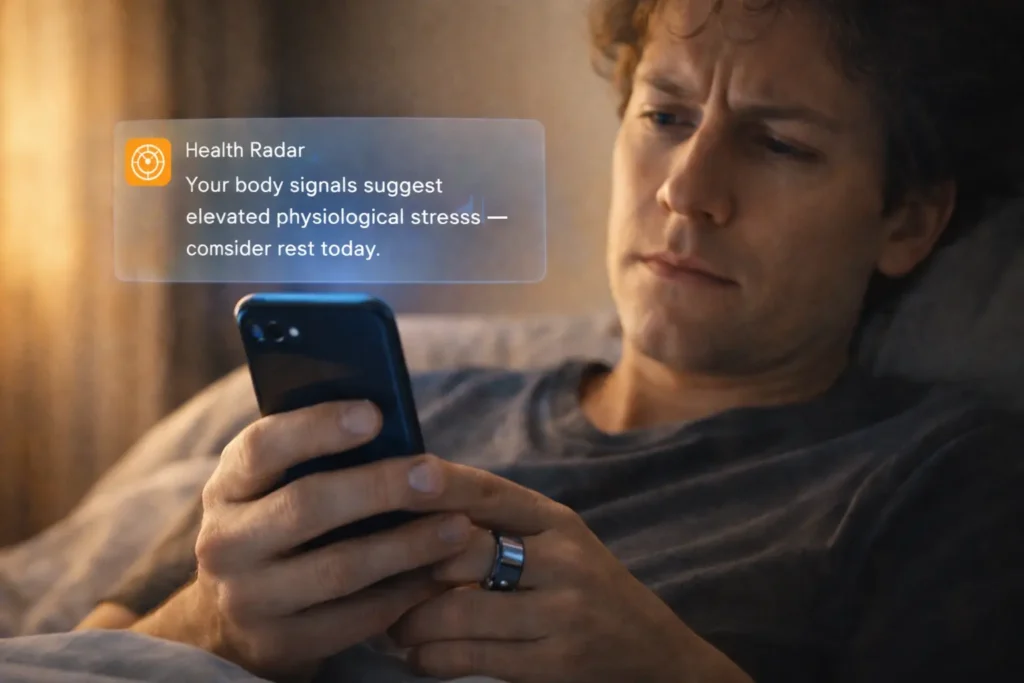
Oura’s Health Radar builds on the company’s existing Symptom Radar tool, which launched in 2024 to flag early signs of illness. The expanded system monitors for cardiovascular strain, surfacing nighttime blood pressure trends, and nighttime breathing patterns and disturbances.
The 2026 Upgrade: Blood Pressure and AI Healthcare
The Oura Ring 5’s headline software addition is Health Radar a proactive health-monitoring feature. Blood Pressure Signals continuously monitors for patterns that may indicate cardiovascular strain, surfacing nighttime blood pressure trends. Nighttime Breathing analysis tracks breathing disturbances during sleep.
Oura is also partnering with on-demand healthcare platform Counsel Health to offer AI-enabled care. Oura members will be able to ask health questions, receive personalized advice, and connect with providers directly in the Oura app.
That last development is significant. The ring stops being a passive tracker and becomes an active healthcare interface a wearable that detects something, flags it, and connects you to a provider who can act on it, all within one platform.
The Honest Limits
Smart rings are monitoring devices, not diagnostic tools. The illness prediction feature identifies physiological deviation patterns that correlate with immune activation — it cannot tell you what you’re getting sick with, how serious it will be, or whether the deviation is from illness versus other stressors like alcohol, poor sleep, or intense exercise.
All good smart rings should offer heart rate and sleep tracking, as well as exercise monitoring and other wellness features such as predicting illnesses. They present findings in a companion app they are not medical devices and their readings should not be used as a substitute for clinical assessment.
The value isn’t diagnosis. It’s the three-day window. Three days of rest, hydration, and reduced stress before symptoms hit can meaningfully change how severe an illness becomes and the ring provides that window consistently and passively, without you doing anything other than wearing it to bed.
Oura has sold over 5.5 million rings since launch, is on track to surpass five million paid members this quarter, and could reach near $2 billion in 2026 sales. That adoption curve reflects something real: the illness prediction feature, specifically, is the reason most new users cite for buying it.
A ring that tells you you’re getting sick before your body does isn’t science fiction. It’s the product shipping in June 2026.
Note: Smart rings are consumer wellness devices, not FDA-cleared medical devices for illness diagnosis. Always consult a qualified healthcare professional for medical concerns. The Oura Ring 5 begins shipping June 4, 2026.
© AiwalaNews | Global Tech & Privacy Edition | May 2026
Read Also:
- 🔗 Why Your Phone Knows You’re Sad Before You Do
- 🔗 The AI That Diagnosed Cancer That 3 Doctors Missed
