ou’re sitting at a coffee shop. Laptop open. Working. Maybe banking. Maybe checking email. The person two tables away looks completely normal. Headphones in. Coffee in hand.
They’re also running software that is silently reading everything moving through that café’s Wi-Fi network. Your login credentials. Your emails. Your banking session. All of it invisible, effortless, and completely undetectable without the right protection.
This isn’t a movie scene. It’s called a man-in-the-middle attack and it happens in coffee shops, airports, hotels, and libraries across America every single day.
The solution fits in your pocket. Costs under $50. And almost nobody is talking about it.
What Is This Device?
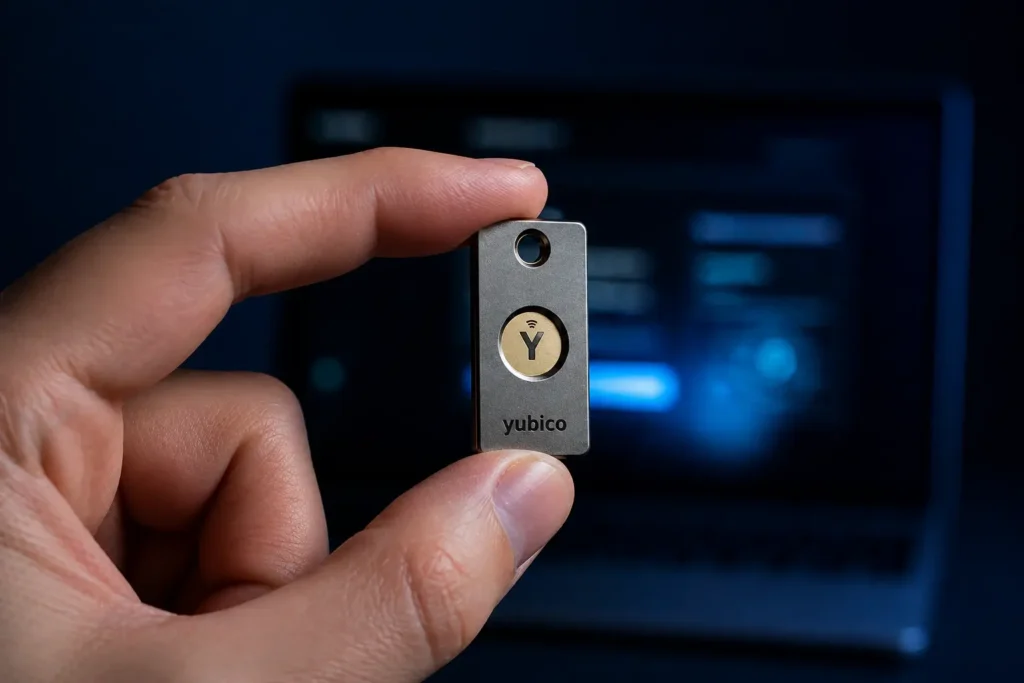
It’s called a hardware security key and it is the single most underrated cybersecurity tool available to regular Americans right now.
The most popular ones YubiKey, Google Titan Key, and Thetis are small USB or NFC devices roughly the size of a house key. You plug one into your laptop or tap it against your phone, and it acts as an unbreakable second layer of authentication for every account it protects.
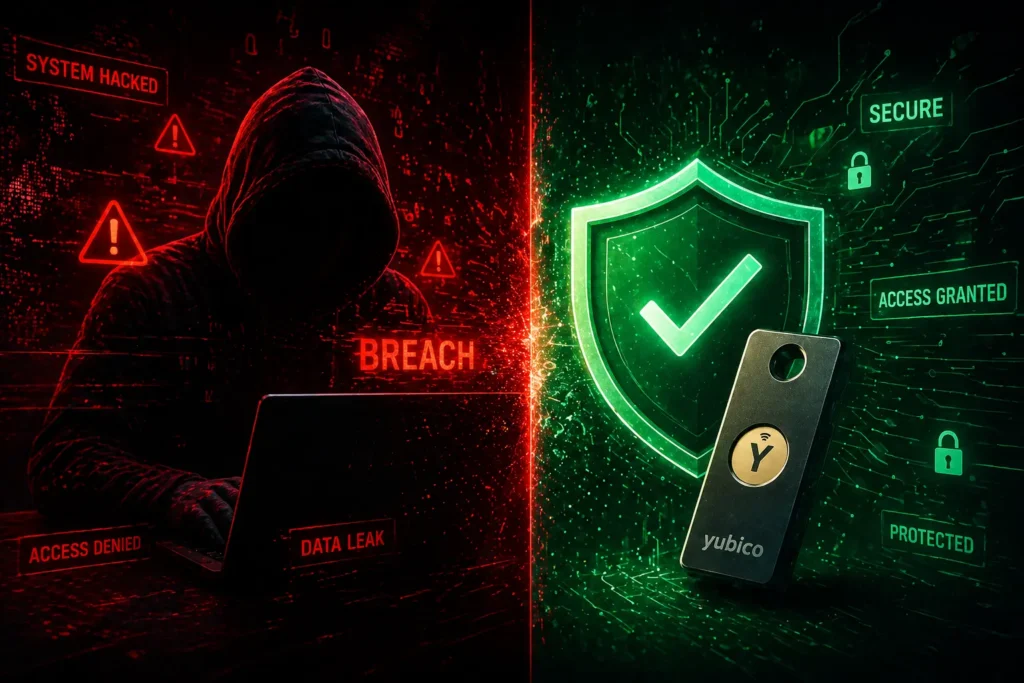
Here’s why hackers hate it: even if they steal your password through phishing, data breaches, Wi-Fi interception, or malware they cannot access your account without physically holding your hardware key. A password stolen from 3,000 miles away is completely useless without the physical device sitting in your pocket.
No app. No SMS code. No email link. Just a physical key that only you possess.
Why Your Current 2FA Is Not Enough
Most Americans who use two-factor authentication rely on SMS codes the six-digit numbers texted to your phone. It feels secure. It isn’t.
SIM swapping attacks have exploded across the United States. A hacker calls your mobile carrier, pretends to be you, and convinces a customer service representative to transfer your phone number to a SIM card they control. Once they own your number, every SMS verification code goes directly to them.
In 2024 alone, the FBI received over $48 million in reported losses directly attributed to SIM swapping attacks. Real people. Real money. Gone.
Authenticator apps like Google Authenticator are better than SMS but they live on your phone. If your phone is compromised by malware, so is your authenticator. If someone physically steals your unlocked phone, they have everything.
A hardware security key has none of these vulnerabilities. It doesn’t connect to the internet. It can’t be remotely accessed. It cannot be SIM-swapped, phished, or malware-infected. It is a physical object and stealing it requires a physical crime.
What a Hardware Key Actually Protects
This is where most people are surprised. A single hardware security key can protect:
Gmail and Google accounts the master key to most people’s entire digital life. Facebook, Instagram, and Twitter/X accounts that get hijacked daily for scams and fraud. Dropbox, iCloud, and OneDrive where your most sensitive documents live. Password managers like 1Password and Bitwarden the vault that holds every other password. Banking and financial accounts many major US banks now support hardware key authentication. Work accounts and VPNs critical for remote workers handling sensitive corporate data.
One device. One tap. Every account locked down with physical-layer security that no hacker sitting in another country can touch.
The Attack It Stops That Nobody Warns You About
Phishing attacks are now so sophisticated that even cybersecurity professionals get fooled. You receive an email that looks exactly like it came from your bank. You click the link. The website looks identical to your bank’s real site. You enter your username, password, and even your SMS verification code all of which are captured in real time and used immediately to log into your actual account.
This attack has a near-100% success rate against SMS-based 2FA. Against a hardware security key it has a 0% success rate.
Here’s why: hardware keys use a security protocol called FIDO2/WebAuthn that cryptographically verifies the exact website you’re logging into. If the website isn’t the legitimate, verified site the key simply won’t authenticate. It doesn’t matter how perfect the fake looks. The key knows. The login fails. The hacker gets nothing.
This single feature alone makes a hardware key worth every cent of its price.
Which Key Should You Buy?
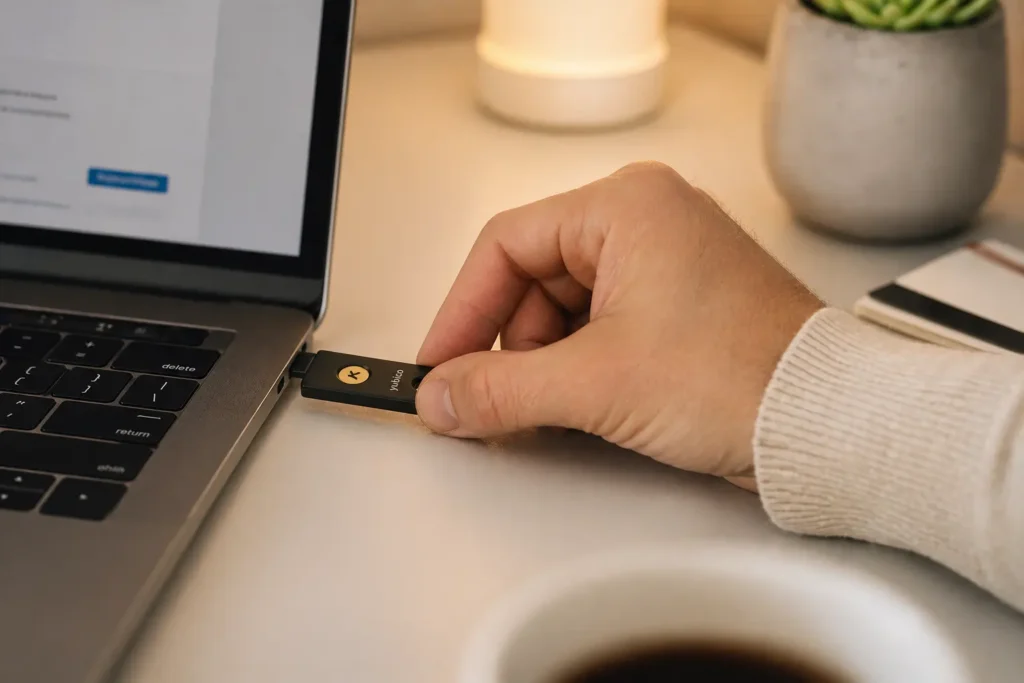
YubiKey 5 NFC – $50 The gold standard. Works with USB-A, USB-C, and NFC tap for phones. Compatible with hundreds of services. Used by Google, Microsoft, and government agencies. Best overall pick for most Americans.
Google Titan Security Key – $30 Made by Google. Works seamlessly with all Google products and most major platforms. Excellent value and backed by one of the world’s largest security teams. Best pick for heavy Google users.
Thetis FIDO2 Key – $25 Budget-friendly without sacrificing core security features. FIDO2 certified, works with all major platforms. Best pick for first-time users who want to test the technology.
Important: Always buy two keys. Register both on every account. Keep one on your keychain, store the backup somewhere safe at home. If you lose your primary key, the backup ensures you’re never locked out.
How to Set One Up in Under 5 Minutes
Step 1 – Purchase your hardware key from the manufacturer’s official website or Amazon’s verified listing.
Step 2 – Go to the security settings of the account you want to protect Gmail, Facebook, your password manager.
Step 3 – Look for “Two-Factor Authentication” or “Security Keys” in the settings menu.
Step 4 – Select “Add Security Key,” insert or tap your key when prompted, and follow the on-screen instructions.
Step 5 – Repeat for every important account. The whole process takes under 5 minutes per account.
That’s it. You are now protected against phishing, SIM swapping, credential stuffing, and man-in-the-middle attacks simultaneously.
The Question You Should Be Asking Yourself
Cybersecurity experts have a saying: “There are two types of people those who have been hacked, and those who don’t know they’ve been hacked yet.”
The average American has 130 online accounts. The average data breach exposes credentials for millions of users overnight. Your email address and password are almost certainly already available on the dark web from a breach you never heard about you can check at haveibeenpwned.com right now.
A hardware security key doesn’t care about any of that. Stolen passwords become worthless. Phishing sites become powerless. Remote hackers become irrelevant.
For $25 to $50 less than a dinner out you can make yourself one of the hardest targets on the internet.
Most Americans won’t do it. They’ll read this, think “I should get one of those,” and forget about it by tomorrow.
Don’t be most Americans.
📌 Read Also:
- 7 Chrome Extensions You Should Delete Right Now for Your Safety
- How Hackers Are Using AI to Steal Identities — And How to Protect Yourself
© AiwalaNews | Global Tech & Privacy Edition | April 2026
