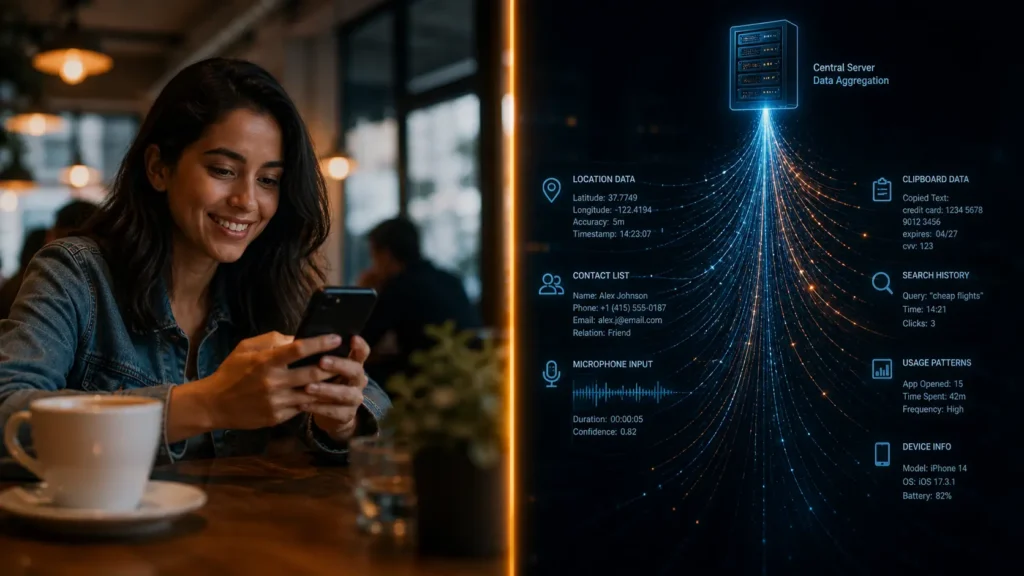
There is no such thing as a free app.
This is not a metaphor. It is the literal, documented, legally-permitted economic reality of the $935 billion mobile application industry an industry built almost entirely on the premise that if you are not paying for the product, you are the product.
Every day, the average American unlocks their phone 96 times. Each unlock triggers dozens of data collection events across multiple apps running in the background. By the time most people go to bed, their free apps have collectively transmitted more personal information about them than they shared with their closest friends that entire week.
The price of free is just invisible. And invisible prices are always the ones that cost the most.
The Business Model Behind $0.00
Building a mobile app costs real money engineering, servers, design, security. A company giving it away for free is not being generous. It is simply monetizing something other than the download price.
That something is you specifically, a data profile that becomes more detailed and more valuable every day you keep using the app.
The mechanism is called behavioral data monetization. Your app usage generates raw signals what you tap, when you scroll, how long you pause, what you skip. This is processed into structured behavioral profiles, then made available to advertising platforms, data brokers, and third-party buyers through programmatic data marketplaces.
The transaction has no price tag you can see. But it has a very precise dollar value on the other end and you receive none of it.

What Free Apps Actually Collect
The scope of collection is significantly broader than most Americans realize.
Location data is the most universally harvested. A 2023 study by the International Computer Science Institute found over 70% of free Android apps share location data with at least one third party including flashlight apps, casual games, and weather widgets. Your location history over months reveals your home, your workplace, your medical appointments, your place of worship, and your daily routine without you typing a single word.
Contact lists collected by apps expose not just your data but the data of every person in your address book without their consent.
Clipboard data everything you copy on your phone was found in 2020 to be actively read by TikTok, LinkedIn, Reddit, and dozens of other major apps, caught only because Apple added a clipboard notification in iOS 14.
Financial behavior signals inferred from your shopping patterns, search history around products, and in-app purchase behavior are among the most valuable data categories in the advertising market. A profile that accurately predicts your income bracket and financial stress level is worth exponentially more than one that simply knows your age and ZIP code.
The Data Broker Pipeline You Never Agreed To
Most free apps are built with third-party SDKs Software Development Kits provided by advertising networks and data brokers, embedded inside the app’s code. They run automatically every time you open the app, collecting data independently and transmitting it to their own servers under their own privacy policies policies you never saw and never agreed to.
A single free app may contain between 10 and 40 third-party SDKs. Each one is a separate data pipeline feeding a separate corporate entity. The data broker Acxiom alone maintains profiles on over 700 million people globally built largely from data streams originating in apps users downloaded for free.
In the United States, this is entirely legal. The data broker industry generated $317 billion in revenue in 2023 powered by data that users generated on free apps and received nothing for.
The Long-Term Costs You Cannot See
The immediate costs location, contacts, behavior are significant. The long-term costs are the ones that should genuinely alarm you.
Insurance pricing is increasingly influenced by behavioral data. Health and life insurers in the US are actively using lifestyle data sourced from brokers to inform risk assessments. The fitness app you use for free may be contributing to a profile that determines what you pay for coverage a decade from now.
Credit and lending decisions already incorporate behavioral signals in alternative scoring models your app usage patterns, your shopping behavior, the stability of your daily routine used as proxies for financial reliability. You never consented to this. You agreed to a privacy policy you didn’t read, for an app you downloaded because it cost nothing.
Political targeting is the most chilling long-term cost. Behavioral profiles built from free app data are purchased by campaigns, advocacy groups, and foreign influence operations. The detailed map of your fears, interests, and emotional triggers assembled quietly over years is one of the most powerful tools ever built for manipulating human opinion at scale.
What You Can Do Right Now
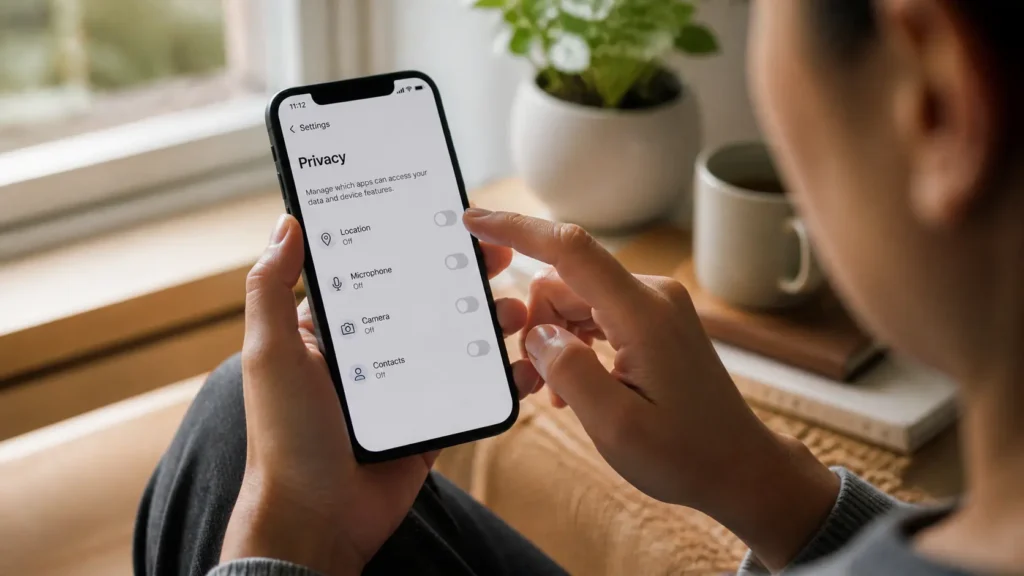
You do not need to delete every free app. But start treating permissions the way you treat your front door something you open deliberately, not automatically.
Audit your permissions this week. On iPhone: Settings → Privacy & Security. On Android: Settings → Privacy → Permission Manager. Revoke location, microphone, camera, and contact access from every app without an obvious functional need for it.
Pay for apps where it matters. A $3 password manager or $5 notes app runs a business model built on your subscription not your data. If an app costs you nothing, your data is covering the difference.
Use a DNS-based tracker blocker. Tools like NextDNS or AdGuard block data transmission to known tracking domains at the network level before data leaves your device for a few dollars a month.
The free app economy is expanding into wearables, smart TVs, and connected cars. The surveillance infrastructure it built is already the most detailed behavioral monitoring system in human history.
You downloaded it. You agreed to it. You paid with something worth far more than money.
Read also: 🔗 The 6 Apps on Your Phone Right Now That Are Selling Your Location While You Sleep — AIwala News
🔗 How Data Brokers Legally Sell Your Home Address, Income, and Daily Routine in the US — AIwala News
© AiwalaNews | Global Tech & Privacy Edition | April 2026
