
A friend of mine, let’s call her Priya since she asked not to be named for this, ran an experiment last year almost by accident. She was booking a hotel room on her iPhone while her husband checked the same app on his older Android phone, sitting right next to her on the couch. The prices didn’t match. Hers was higher. Not by a huge amount, but enough that she screenshotted both screens and sent them to me, confused and a little annoyed.
That screenshot sparked a question worth actually digging into: does your phone model genuinely change what you pay, or was this just a coincidence, a flash sale timing gap, a cached price?
The Pricing Signal Nobody Tells You About
Shopping apps and travel booking platforms have access to far more information than most people realize the moment an app opens. Beyond your location and search history, apps can often detect device type, operating system, browser version, and even screen resolution. None of that is hidden or illegal to collect, it’s standard technical information passed along whenever an app or website loads.
Several pricing researchers and journalists have documented cases over the years where certain platforms appeared to show different prices to users on premium devices, most famously an early case involving a major travel site that reportedly showed higher hotel prices to Mac users compared to Windows users, based on the assumption that Mac owners tend to have higher average spending power and might be less price sensitive. The company involved pushed back on the framing at the time, saying it was about relevant results, not a Mac tax. But the underlying capability, adjusting what’s shown based on the device pulling up the page, was never really in dispute.

Why Would a Company Do This
I spoke with a pricing analyst who’s worked on ecommerce optimization for a mid sized retailer (she asked to stay anonymous since her employer has strict PR policies around pricing discussions). Her explanation was straightforward: “Dynamic pricing isn’t some secret evil plan. It’s a spreadsheet decision. If data shows that a certain segment of users, say, people on the newest flagship phones, convert at a certain price point without pushing back, some systems are built to test slightly higher prices for that segment and see what happens to sales.”
This is sometimes called price discrimination in economics, though that term sounds harsher than what’s usually happening in practice. It’s less about singling anyone out and more about algorithms constantly testing small variations to maximize revenue across millions of users, the same logic behind why two people searching the same flight minutes apart sometimes see different fares.
What I Actually Tested
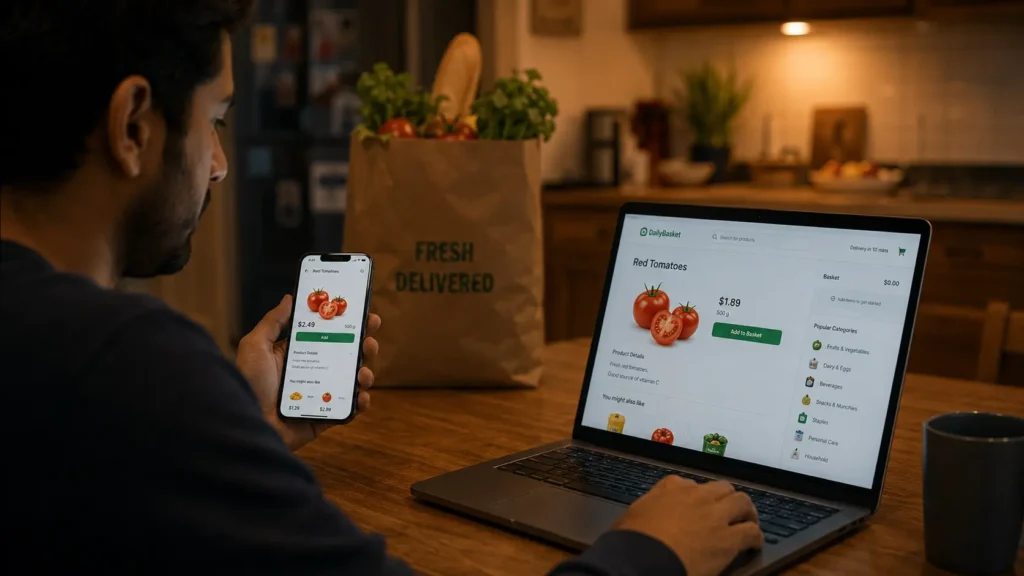
Curious after hearing Priya’s story, I ran my own small, unscientific test. I opened the same grocery delivery app on three devices, a recent flagship phone, an older budget Android phone, and a laptop browser, all connected to the same WiFi network, searching the same items within a few minutes of each other. Two items showed identical prices across all three. One showed a delivery fee that was about a dollar higher on the flagship phone.
Was that dynamic device based pricing, or just an algorithm adjusting for demand at that exact minute? Honestly, I can’t prove it either way with total certainty, and neither can most shoppers who notice these gaps. That uncertainty is actually part of the problem. These systems are opaque by design, and companies rarely explain exactly which signals feed into a given price.
The Signals That Might Be at Play
Device model is only one possible input among many. Other factors that commonly influence what price you see include your browsing history on that platform, whether you’ve searched the same item repeatedly (sometimes read as high intent to buy), your general location, the time of day, current demand, and whether you’re logged in as a returning customer versus browsing as a guest. Some of these are well documented. Others remain more speculative, based on user reports rather than confirmed company policy.
What You Can Actually Do About It
A few habits genuinely help level the field. Browsing in incognito or private mode removes some tracking cookies that might influence what you’re shown. Comparing prices across a phone and a laptop, or between two different accounts, occasionally reveals a gap worth knowing about, the way it did for Priya. Clearing app cache before a big purchase, or simply checking a price on a friend’s older device before buying, costs nothing and sometimes saves real money.
None of this means every price difference you notice is a deliberate scheme targeting your phone brand. Plenty of gaps come down to regional taxes, delivery zone differences, or simple timing. But the underlying capability, that a shopping app can technically see what device you’re using and adjust accordingly, is real, documented, and worth knowing about the next time two screens sitting side by side on the same couch show two different totals for the exact same order.
Trust in these platforms depends on transparency, and right now, most shoppers are navigating that gap with nothing more than a screenshot and a hunch.
Read also this: Why Two People See Different Flight Prices for the Same Seat | The Hidden Data Your Shopping Apps Collect Before You Even Log In
© AiwalaNews | Global Tech & Privacy Edition | April 2026
