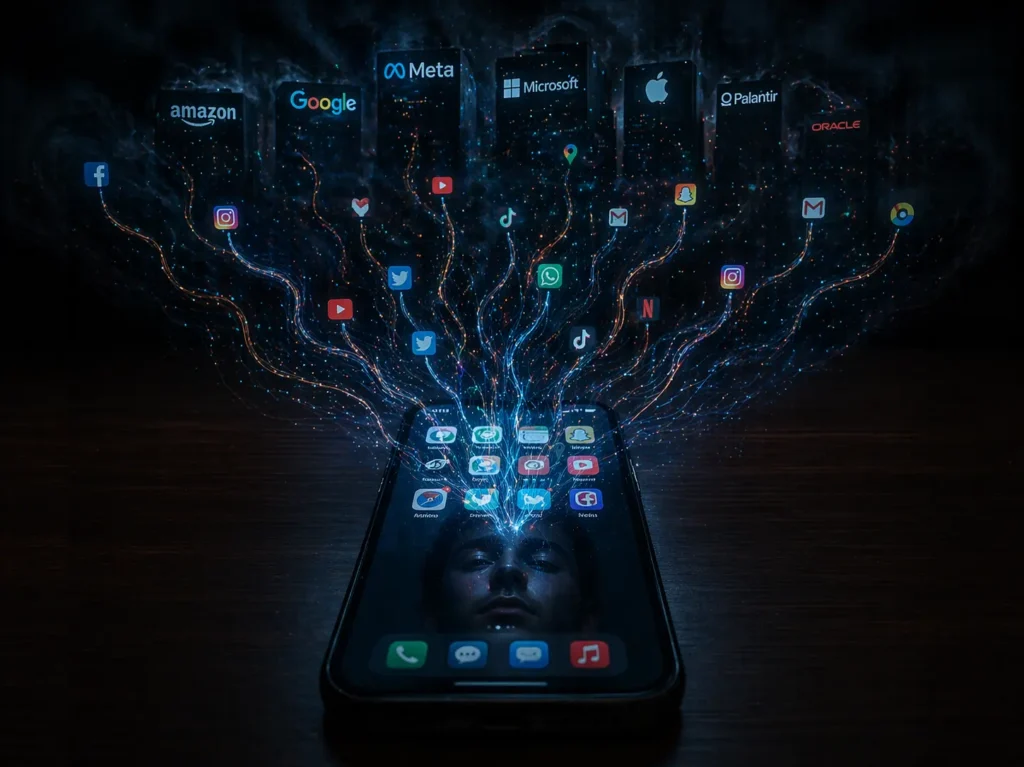
You didn’t sell your data. You just downloaded a free app. Same thing.
You have somewhere between 40 and 80 apps on your phone right now. You use maybe 12 regularly. You’ve forgotten half exist. And at least 11 of them are running a quiet, invisible, extraordinarily profitable business using the most valuable thing you own.
Your data.
Not your money. Not your attention. Your actual behavioral data where you go, what you search, how you sleep, who you talk to, what you buy, and what makes you stop scrolling.
This is not paranoia. This is the business model.
How It Actually Works
Every free app needs revenue. In most cases, that revenue isn’t you paying it’s data brokers, advertisers, and analytics companies paying for access to your behavioral profile.
The app collects your data through permissions you granted at install. It packages it. It sells it. Those buyers sell it again to insurers, employers, political campaigns, and financial institutions.
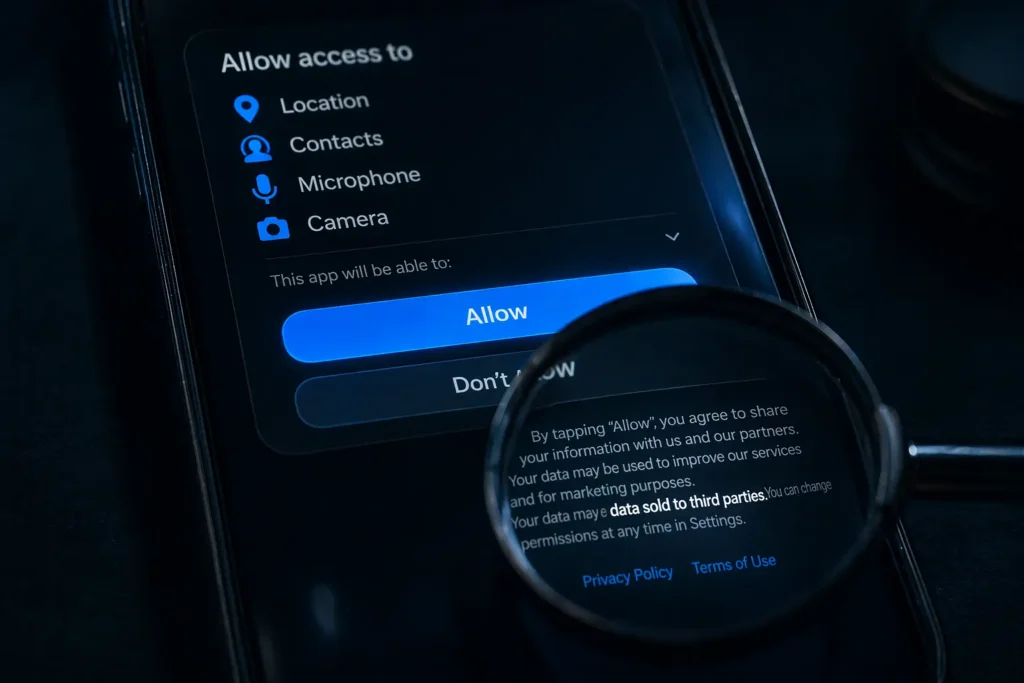
This happens automatically, continuously, invisibly every single day your phone is on. That “Allow” tap you made in two seconds? It was worth more than you know.
The 11 Apps Doing This Right Now
01 – Weather Apps. To tell you it’ll rain, a weather app needs your location. Fair. But most free weather apps request continuous GPS tracking, contacts access, and device identifiers that have nothing to do with forecasting. One major app was caught selling precise location data to hedge funds to predict retail foot traffic. You got a five-day forecast. They got your commute pattern.
02 – Free VPNs. The irony is brutal. You downloaded a free VPN to protect your privacy. A free VPN sees everything every site, every search, every login, every purchase. A 2020 audit found over 70% of top free VPN apps contained third-party tracking libraries. Several were directly owned by data harvesting companies.
03 – Flashlight Apps. A flashlight needs camera flash access. That’s all. Yet top flashlight apps historically requested location, contacts, call history, and device identifiers. One transmitted precise GPS coordinates to advertising servers every 12 minutes. None of that turns on a light.
04 – Free Photo Editing Apps. That filter app is building a biometric facial database connected to real identities. Facial geometry data is used for identity verification, emotion detection, and insurance profiling. Several apps outside GDPR jurisdiction grant themselves a permanent, royalty-free license to your face and every image you upload. You gave them your face. Forever. For a filter.
05 – Free Games. Candy Crush. Subway Surfers. Any game you half-forgot downloading. Free mobile games deploy up to 14 different tracking SDKs simultaneously each reporting to a different analytics company. Your play patterns, purchase hesitation, and psychological engagement metrics are sold in real-time auctions, sometimes hundreds of times daily.
06 – Keyboard Apps. This is the one that should genuinely alarm you. A third-party keyboard sits beneath everything you type every password, every private message, every banking detail, every symptom you searched. Several major keyboard apps have been found transmitting keystroke data to remote servers. They see it all. Literally all of it.
07 – Period and Fertility Tracking Apps. These apps collect some of the most sensitive health data a person can generate cycle regularity, ovulation windows, pregnancy attempts, mood, sexual activity. Multiple major apps have been found sharing this data with Facebook and data brokers. After 2022 in the US, this stopped feeling like a privacy issue and started feeling like a legal one.
08 – Shopping and Coupon Apps. They track not just what you buy but what you almost bought how long you hovered, what price made you hesitate. Several coupon apps sell location data revealing medical facility visits, religious attendance, and political activity inferred from where you physically go. The discount is real. So is the cost.
09 – Dating Apps. Dating apps know things your closest friends don’t. A 2023 investigation found major dating apps sharing precise location, sexual preference, and psychological profile data with hundreds of advertising partners. In countries without strong data protection, this data has been linked to targeted harassment and blackmail.
10 – News and Media Apps. What you read, for how long, what makes you stop this behavioral fingerprint reveals your political leanings, anxiety triggers, and persuadability. This data is sold to political campaigns and advocacy groups with remarkable precision. Your news habit is a political profile being sold in real time.
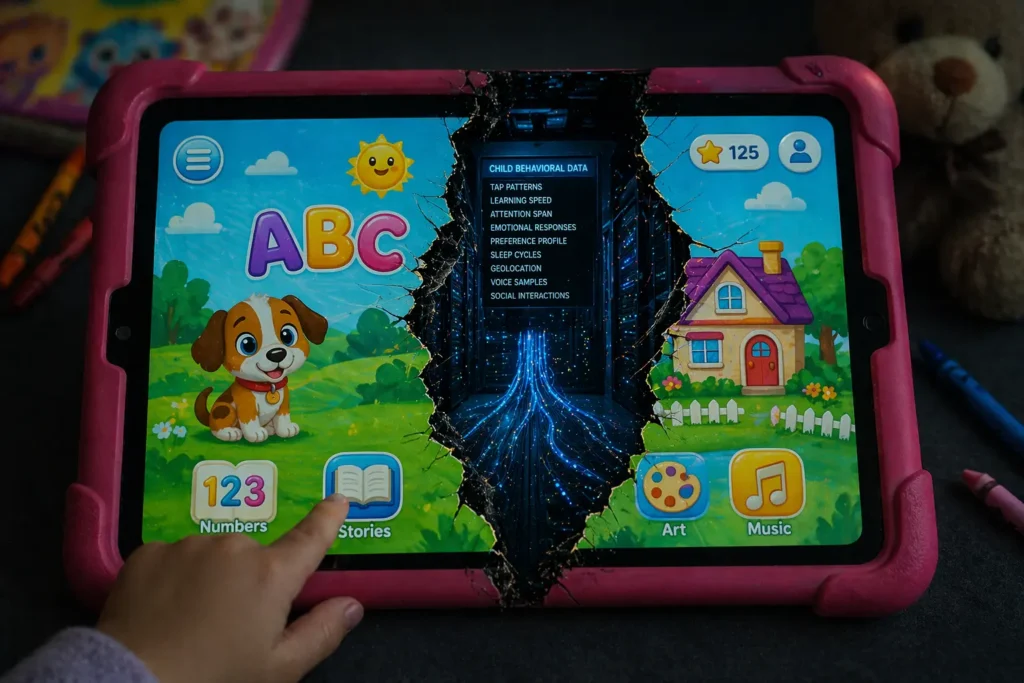
11 – Children’s Apps. The most troubling. A 2022 study found the majority of top-rated children’s apps on both major app stores contained third-party tracking code. Children’s attention patterns, emotional responses, and family routine data collected and monetized while parents assume a children’s label means protection. It doesn’t.
Three Things You Can Do Today
Audit your permissions now. iPhone: Settings → Privacy & Security. Android: Settings → Privacy → Permission Manager. Revoke location, microphone, and contacts from every app that doesn’t functionally need it. Takes eleven minutes.
Pay for the alternative. For VPNs, pay for ProtonVPN or Mullvad. For weather, use your phone’s built-in app. The subscription costs less than the data you’re surrendering for free.
Read the permission request at install. A flashlight asking for contacts. A game asking for precise location. That mismatch is the tell. Deny it immediately. If the app stops working it was never really a flashlight.
The Truth Nobody Prints on the App Store Page
There is no free app. There is no free service.
Every free tool is a data extraction interface wearing a utility costume. The game, the weather app, the flashlight these are not products. They are the bait. You are the product.
Your phone knows more about you than your doctor, your partner, and your therapist combined.
The apps on it are not keeping that to themselves.
© AiwalaNews | Global Tech & Privacy Edition | April 2026
