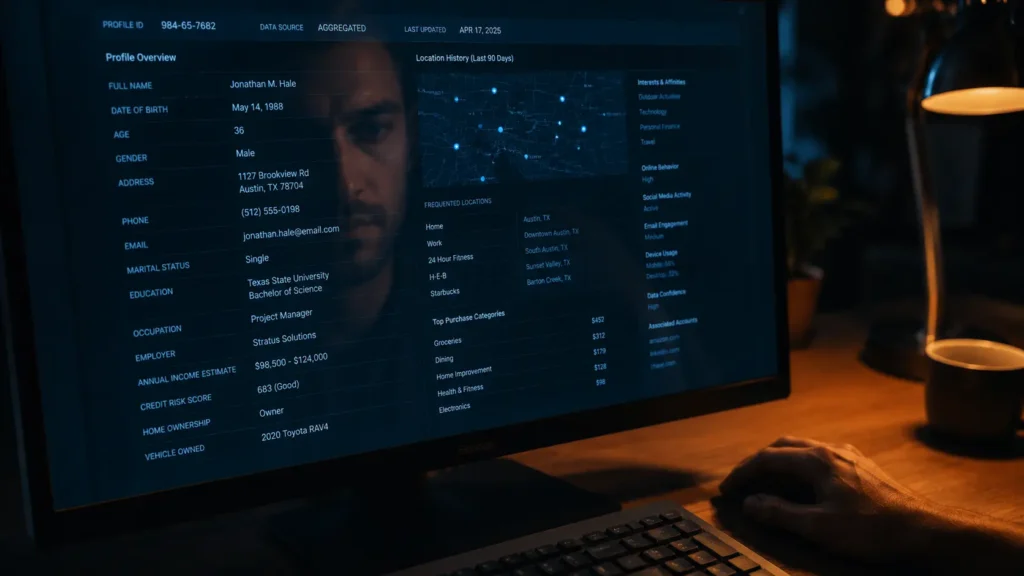
You Google your own name. The first result is a website you have never visited listing your home address, your phone number, your estimated income, the names of your relatives, and the routes you regularly drive. You did not put any of that there. You never signed up for anything. You never agreed to anything you remember agreeing to.
Someone collected it. Someone packaged it. Someone sold it. And they have been doing it for years legally, profitably, and almost entirely without your knowledge.
Welcome to the data broker industry a $300 billion machine built entirely around selling you to strangers.
The Industry Most Americans Have Never Heard Of
The data broker market was valued at approximately $294 billion in 2025 and is projected to reach $448 billion by 2031, growing at nearly 7.3% annually. To put that in perspective: this is larger than the global music industry, the global pharmaceutical advertising market, and the entire US film industry combined.
There are at least 750 unique data brokerages operating in the United States alone. With no comprehensive federal data privacy law in place, the full number and the full risk they pose to personal privacy is nearly impossible to quantify.
These are not shadowy underground operations. The largest players are household names in business circles: Acxiom, LexisNexis, CoreLogic, Equifax, Epsilon, Spokeo, Whitepages. They operate legally, file taxes, and have investor relations pages. They simply do not advertise to the people whose data they are selling.
What They Know About You Specifically
The scope is more granular than most people can comfortably accept.
Acxiom, one of the world’s largest data brokers, claims to hold profiles on more than 300 million Americans each profile containing over 10,000 unique consumer attributes.
Ten thousand data points. On one person. Here is what those points typically include:
Data brokers collect health information, the websites you visit, which products you buy, how you pay, which advertisements you click on. Thanks to the proliferation of smartphones and wearables, they also collect and sell real-time location data where you go, how often, and at what time of day.
Public records court filings, census data, voter registration provide birth dates, political affiliation, and marital status. Purchase histories, loyalty programme data, and financial transaction records layer in income estimates, spending behaviour, and financial vulnerability scores.
The result is a profile that knows not just who you are, but how you behave, what you fear, what you want, and what you are likely to do next.
How They Got It Without Asking You
This is the part that surprises people most: the majority of this data was collected legally, through mechanisms most people consented to without realising it.
When you sign up for a sweepstakes, a free trial, or a newsletter, the fine print often states that your information can be shared with “partners” or “third parties.” Those third parties frequently include data brokers. Another common collection method is web scraping using specialised software, cookies, or scripts to harvest publicly available information at scale.
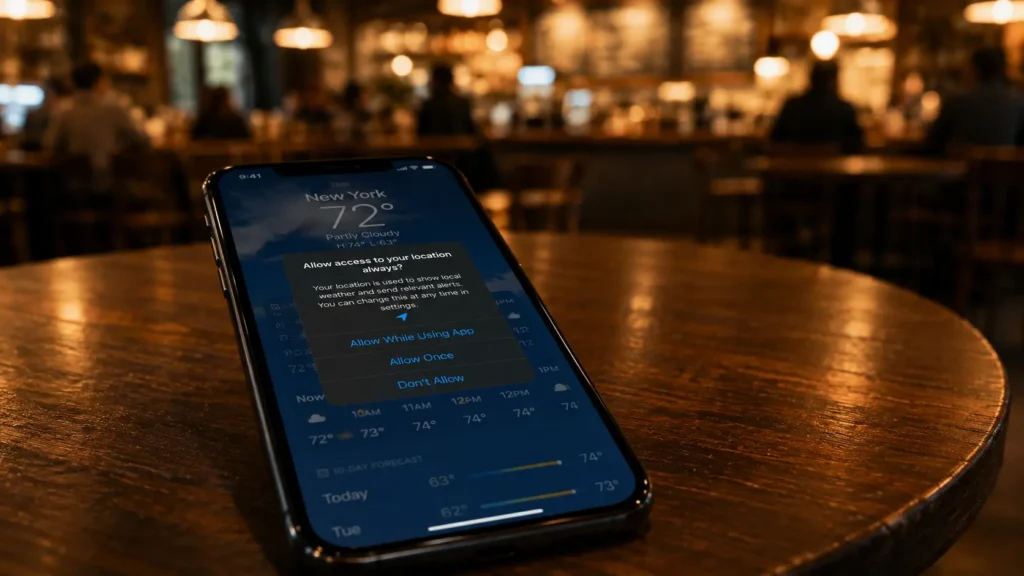
The full supply chain looks like this: a weather app silently collects your location. A marketing firm buys a segment labelled “likely expecting parents” and targets you with ads. Between the app and the advertiser sits the data broker enriching, packaging, and reselling the signal your phone generated while you were just checking if it would rain.
Nearly six in ten Americans frequently skip reading privacy policies meaning most people are unknowingly handing over their information through buried consent clauses in terms of service agreements they never read.
Who Is Buying Your Data And Why
The banking, financial services, and insurance sector represents the single largest buyer of brokered data, accounting for approximately $82 billion of the market in 2025 driven by demand for consumer creditworthiness data, identity verification intelligence, fraud risk signals, and portfolio analytics.
But the buyers extend far beyond financial institutions:
Data broker profiles have been used to target vulnerable populations with predatory advertising, to screen job applicants and tenants, and to identify individuals for government surveillance. Some brokers have been caught selling data on military personnel and protestors to foreign adversaries.
California’s state registry recently revealed that 33 registered data brokers reported selling Californians’ data to entities in North Korea, China, Russia, and Iran in 2025. Not hackers. Registered, legal American businesses.
The Consumer Financial Protection Bureau (CFPB) found that data brokers routinely sidestep consumer protection laws, selling sensitive personal and financial information — including Social Security numbers, income data, and phone numbers to scammers targeting people in financial distress.
The Legal Vacuum That Makes It All Possible
In the United States, there is no comprehensive federal law that prevents data brokers from collecting, packaging, and selling personal information especially when it originates from public sources or permissions buried in terms of service agreements.
The patchwork of protections that does exist is fragmented and limited. HIPAA prevents brokers from accessing protected health information from medical providers but not from inferring health conditions through purchase data. The Fair Credit Reporting Act governs how credit data is used but covers only a narrow slice of what brokers actually sell.
Nineteen US states have enacted some form of comprehensive privacy law. California’s Delete Act allows residents to submit a single opt-out request that all registered brokers must honour. But broader federal proposals, including the American Data Privacy Protection Act, have repeatedly failed to pass.
The European Union, by contrast, operates under GDPR which requires explicit, specific consent before personal data can be collected or sold, and carries fines of up to 4% of global annual revenue for violations. The gap between US and EU consumer data protection is one of the widest regulatory asymmetries in modern commerce.
Opting Out And Why It Almost Doesn’t Work
You can opt out of data brokers. Technically. She could contact all 750 data brokers, figure out each one’s individual process, which forms they require, the terms they have set, and the timelines involved. But even after completing every opt-out, the moment she opens her weather app, it is a brand-new data auction. Unless she opts out weekly, all that effort resets.
California’s enforcement strike force, launched in late 2025, has actively pursued brokers that failed to register but the fines are modest: ROR Partners paid $56,600 for building profiles on 262 million Americans without registering. Datamasters paid $45,000 and was ordered to stop selling Californians’ data altogether. Forty-five thousand dollars. For profiling a state of 40 million people.
What You Can Actually Do
Three actions that materially reduce your exposure:
Search your name on Spokeo, Whitepages, BeenVerified, and Intelius. What you find is a small fraction of what brokers actually hold but it is a useful measure of your visible exposure.
Opt out of the largest brokers first. Acxiom, LexisNexis, and Epsilon collectively feed data to hundreds of downstream buyers. Removing yourself from these sources has a disproportionate impact.
Read app permission requests. Location access granted to a utility app is not the same as location access granted to a weather app. Both are legal. Only one needs your precise coordinates to function.
The data broker industry did not grow to $300 billion by being obvious. It grew by being invisible collecting, enriching, and reselling the digital residue of ordinary life, quietly, continuously, at a scale most people find difficult to comprehend until they see their own profile staring back at them from a search result.
Now you know what that profile costs. It was free to build. It has been sold many times already.
📌 Read Also:
- Why the US Government Just Banned This Chinese App’s Core Technology
- The AI That Reads Your Emotions Through Your Webcam Before You Say a Word
© AiwalaNews | Global Tech & Privacy Edition | April 2026
