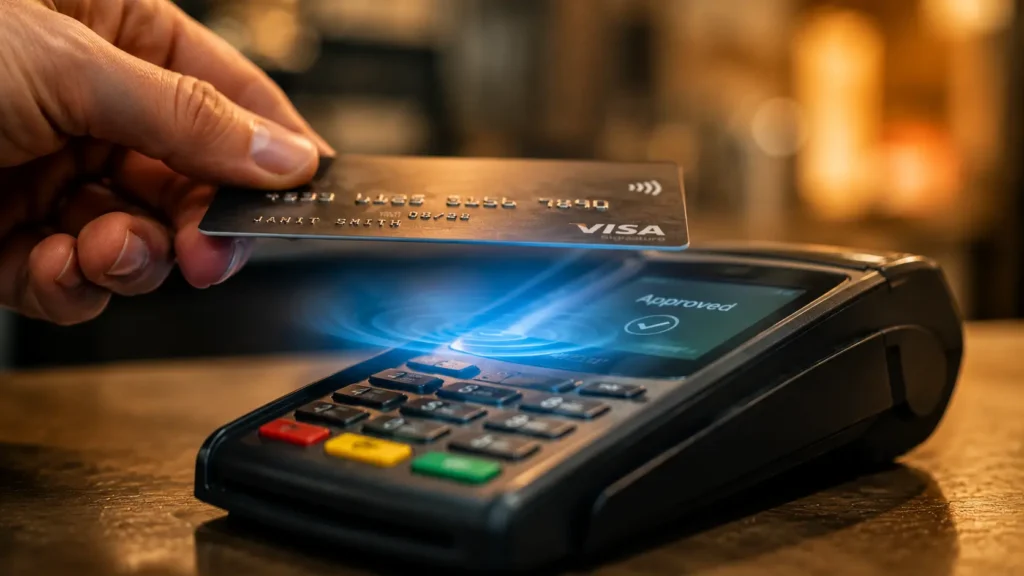
You tap your card. The terminal beeps. You walk away with your coffee. The entire transaction from contact to confirmation happens faster than you can finish reading this sentence.
More than half of Americans now use this checkout method, yet most people have no idea what happens in those brief seconds when they tap their card. Contactless methods like Tap to Pay have over 60% penetration in the US as of 2025.
What actually happens in that fraction of a second is a small miracle of cryptography one that makes your card simultaneously faster and harder to steal from than the magnetic stripe it replaced.
The Invisible Handshake
NFC, which stands for “near field communication,” is the technology that powers contactless payments through a type of radio frequency identification. The connection works only within a range of around 4cm. When a card enters that field, the NFC chip activates instantly and sends encrypted payment data. Unlike Bluetooth or Wi-Fi, NFC requires close physical proximity that design forms a built-in safety feature for any NFC card payment.
The embedded antenna and microchip sit inside your contactless card or smartphone, with no battery required the card draws power directly from the terminal’s electromagnetic field the moment it gets close enough. The two devices then exchange encrypted payment data in milliseconds.
That proximity requirement is not a limitation. It is the first layer of security: a fraudster cannot read your card from across the room because the physics of the radio field simply will not allow it.
The Code That Self-Destructs After One Use
Here is the part that makes tap-to-pay fundamentally different and far safer than the old magnetic stripe.
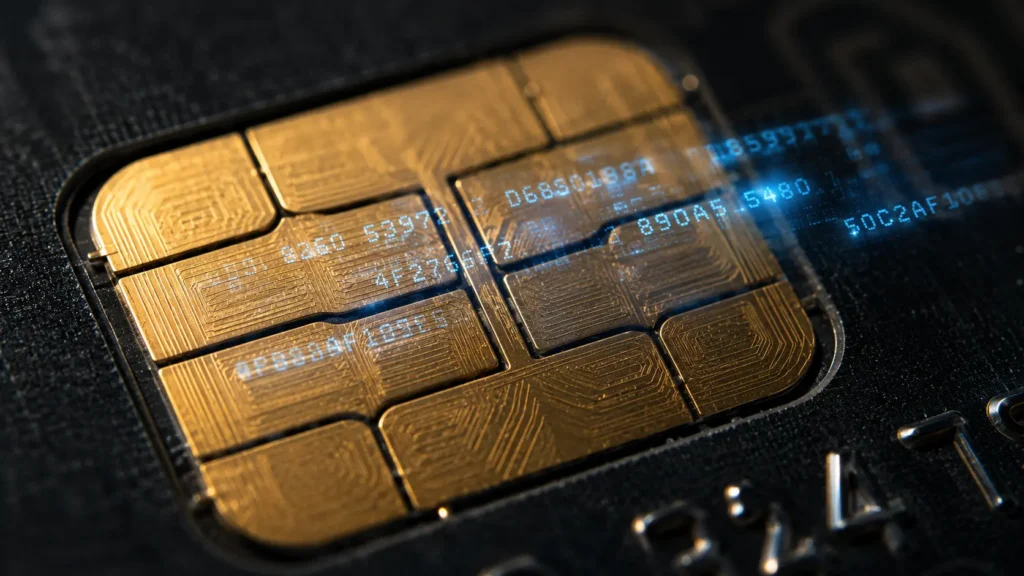
Unlike a magnetic stripe, which contains unchanging information, the EMV chip generates a dynamic one-time use code for each transaction called a cryptogram. Because the cryptogram changes with every transaction, even if the card data is stolen, the information can’t be used to create counterfeit cards because the stolen cryptogram would have already expired.
When an EMV card is used at a chip-enabled terminal, the microprocessor chip communicates with the terminal to generate a unique code for that specific transaction a one-time code, known as a cryptogram, nearly impossible for fraudsters to predict or replicate.
This is the precise reason your card cannot be cloned the way old magnetic stripe cards were. The unique transaction data generated by the chip cannot be reused, preventing fraudsters from creating counterfeit cards with stolen information. Even if someone intercepted yesterday’s transaction code in full, it would be worthless today the card has already moved on to generating a new one.
The results have been measurable at a global scale. Together, EMV and tokenization have reduced card-present fraud by 87% and digital payment fraud by 67% since widespread adoption.
Tokenization Your Real Card Number Never Leaves Your Pocket
The second technology working alongside the cryptogram solves a different problem entirely: what happens to your actual card number during the transaction.
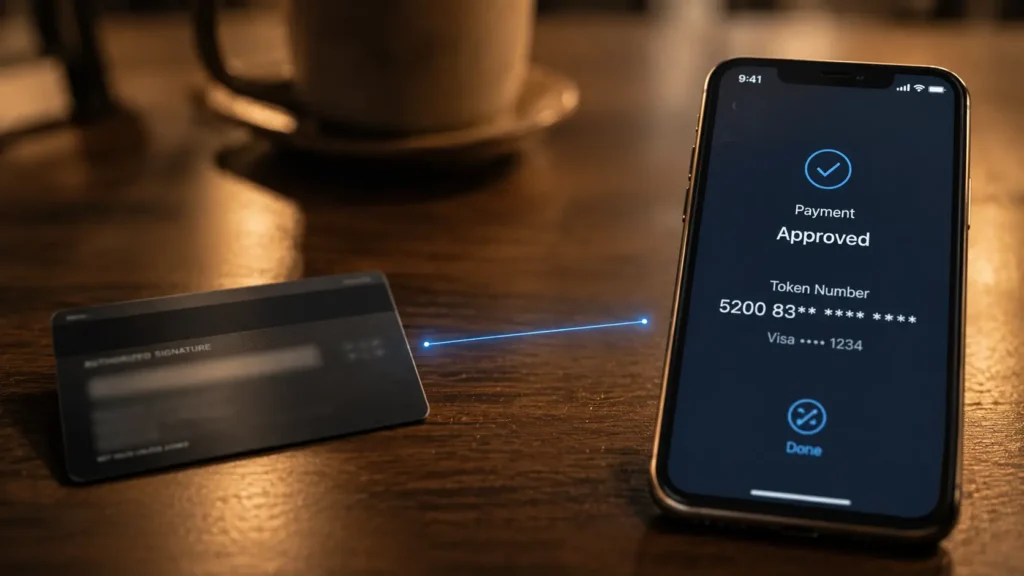
The real card number never leaves the customer’s mobile device or card chip. Only the tokenized version travels to your processor, the card network, and the issuing bank so the point of sale never stores sensitive cardholder data.
EMV tokenization replaces a cardholder’s Primary Account Number with a non-sensitive token that is worthless if intercepted. While EMV chip cards prevent card-present fraud by generating a unique cryptogram per transaction, tokenization extends that protection across digital channels and throughout the entire payment ecosystem.
For mobile wallets specifically, when a customer adds a credit card to Apple Pay or Google Pay, the wallet app requests a device-specific token from the issuer. That token lives in the phone’s secure element a dedicated chip isolated from the operating system and only gets transmitted during a tap.
The practical result: a hacker who breaches a retailer’s payment database does not get your card number. Instead of millions of account numbers being stored in retailers’ systems, all that a fraudster can harvest are random tokens strings of meaningless digits with no value outside the single device and merchant relationship that generated them.
The Six Steps, In Under a Second
Stitching the technologies together, here is the complete sequence from tap to receipt:
The business initiates the transaction. The devices establish a connection. The NFC technology securely transmits the encrypted payment details from the shopper’s device to the payment terminal in less than a second. The payment network authorizes the transaction. The payment gateway immediately routes the encrypted data to the acquiring bank and the major card networks for approval. The payment is confirmed the merchant receives an instant approval notification on their screen, and the checkout process is complete.
The remarkable part is that several of these steps encryption, cryptogram generation, tokenisation, and the initial network handshake happen locally, on the chip itself, before any data travels to a bank at all. The trip to your actual bank for final authorisation is often the slowest part of the entire process and even that typically completes in well under a second on a stable connection.
Why This Beats a PIN, a Signature, and a Password
No PIN entry or signature is needed for smaller transactions, streamlining the checkout process but the security has not been traded away for that convenience. It has been replaced with something more robust, just invisible.
Advanced encryption, biometric verification such as face and fingerprint recognition, and tokenization technologies have made these touchless transactions not just faster, but remarkably secure. For mobile wallet transactions specifically, your phone’s own biometric layer Face ID, fingerprint confirms it is genuinely you before the token is even released to the NFC chip.
EMV represents the global standard for secure credit and debit card transactions, named after its original developers Europay, Mastercard, and Visa utilising embedded microprocessor chips to authenticate transactions with sophisticated encryption. Adoption is now near-universal: Europe sits at 98-99% penetration, Canada at approximately 99%, and the United States finally reached mature adoption status around 2022-2023.
What This Means the Next Time You Tap
The half-second between tapping your card and hearing the approval beep contains an entire cryptographic negotiation: a radio handshake that only works at near-zero range, a transaction code manufactured fresh and destroyed after a single use, and a tokenised stand-in for your real account number that travels through every system in the chain without ever revealing what it represents.
Your card has never sent your card number anywhere during a tap-to-pay transaction. It never had to. The number that matters has already been replaced by something smarter and faster before your hand has even left the terminal.
📌 Read Also:
- The Secret Technology Banks Use to Detect Fraud Before You Notice It
- How Face Unlock Works in 0.1 Seconds — The 30,000 Invisible Dots Your Phone Fires at Your Face
© AiwalaNews | Global Tech & Privacy Edition | April 2026
