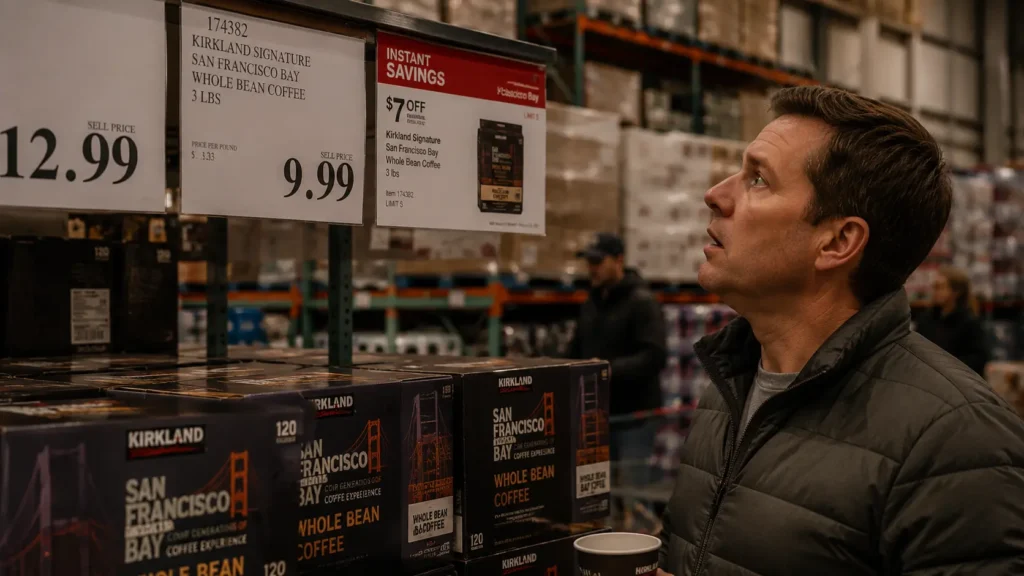
Here is a number that should not make sense in retail: Costco generated $242.29 billion in revenue and $6.29 billion in profits in 2023. A company that size, selling that much, should be drowning in margin. It isn’t. Profit margins for product sales sit around 11-15% thinner than almost any major retailer in the world.
And yet Costco’s prices on identical products are routinely lower than Walmart, Target, or your local grocery store. The explanation is not a trick. It is a complete inversion of how retail businesses are supposed to make money and once you see the mechanism, you cannot un-see it.
Costco Doesn’t Sell You Things. It Sells You a Ticket
Costco makes most of its profit from annual membership fees, not product margins. Products are sold at near-cost prices to build trust, volume, and retention.
This single structural decision changes everything downstream. Membership fees generate approximately $4.6 billion annually and represent the vast majority of Costco’s operating income. While membership fees are only 1.9% of total revenue, the company’s 11% average product markup means merchandise sales primarily cover operational costs.
In Q3 2025, Costco made $1.24 billion from membership sales, accounting for 65% of Costco’s net income nearly pure profit, since printing a card and managing an account costs almost nothing compared to the revenue it generates.
Think about that: Costco makes $240+ billion in sales but relatively little profit from those sales. Instead, the $4.5+ billion in membership fees which costs almost nothing to collect becomes the actual profit. The merchandise is not the business. The membership card is the business. The merchandise is what justifies renewing it.
Why This Forces Costco to Keep Prices Low Permanently
Here is the part that makes the model genuinely different from “everyday low prices” marketing at other chains. Because Costco’s profit comes from memberships, not markups, they have no incentive to raise prices. In fact, they’re incentivized to keep prices low to justify membership renewals. When suppliers try to increase prices, Costco often refuses, removes the product, or absorbs the increase temporarily.
At a normal retailer, raising prices increases profit directly. At Costco, raising prices on products does almost nothing for profit and risks the one number the entire business depends on: the renewal rate. Costco maintains renewal rates above 90% in the U.S. and Canada, and over 88% globally. Once someone becomes a member, they almost never leave. This creates predictable, recurring revenue that Wall Street loves.
The famous example is the $1.50 hot dog combo unchanged in price since 1985. “What are they going to do? Raise the price of the hot dog by 20 cents, upset their members, and not even really make all that much up anyway?” explains Alison Cayne, adjunct professor at Columbia Business School. “They could raise the price, but then they would erode their most important asset: their members.”
The Three Operational Tricks That Make Low Prices Possible
Beyond the membership structure, Costco strips out cost wherever it physically can.
Radically fewer products. The company carries around 4,000 stock keeping units. This is much fewer compared to traditional grocery stores, which often have tens of thousands of items. By selling fewer products, Costco can negotiate better prices with suppliers and keep inventory manageable. A typical supermarket stocks 30,000+ SKUs. Costco’s deliberate scarcity means each remaining product sells at enormous volume and volume is the single biggest lever in supplier negotiation.
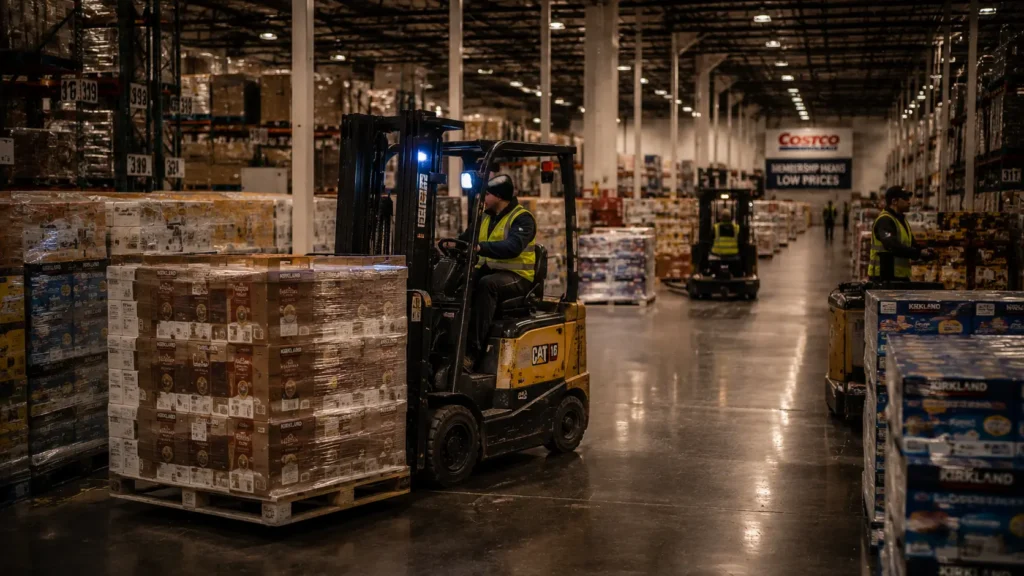
Pallet-to-floor distribution. When inventory reaches most grocery stores, it needs to be unpacked and stocked on shelves, a process that requires paying for additional labor. Costco eliminates that extra work by selling its bulk products directly from the pallets they are shipped on, yielding savings the store can pass on to its customers. No shelf-stocking labour. No fancy displays. The product sits on the same pallet a forklift dropped it on.
Near-zero marketing spend. The retailer cuts excess costs by eschewing most traditional marketing tactics. Capped markups (no more than 14-15%) and no advertising spend align with its philosophy of member savings over margins. Compare that to Walmart or Target’s billion-dollar annual ad budgets, all of which gets baked into the price you pay at the register elsewhere.
Kirkland Signature: The Hidden Profit Engine
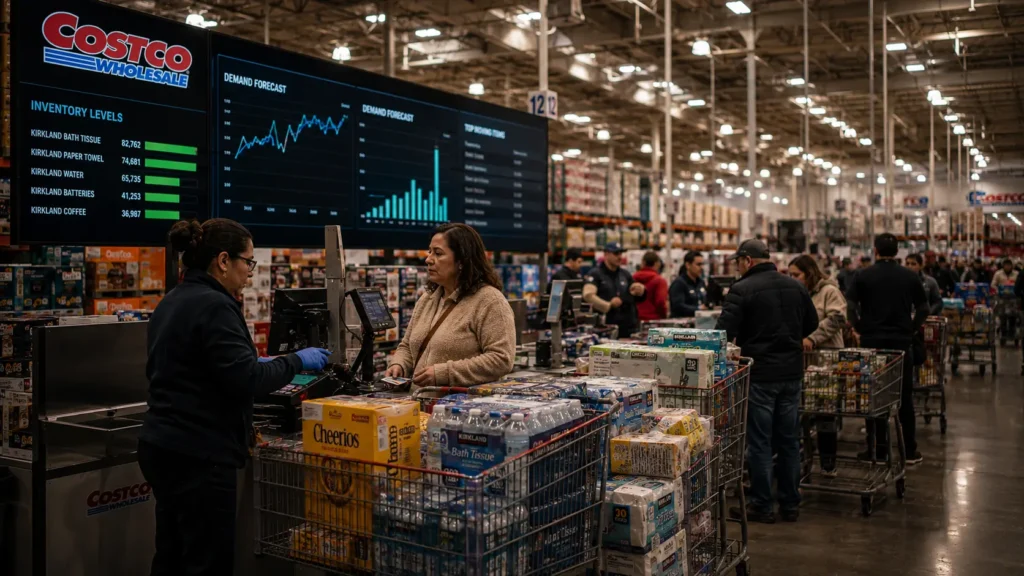
The one place Costco does take healthy margins is its own private label and it has become enormous. As of 2025, there are over 500 Kirkland Signature products, representing just 12.5% of Costco’s assortment. Despite keeping selection limited, Kirkland products make up an outsized 23% of total 2024 revenue. Selling at up to 15% margins, we can infer that Kirkland products are a major profit driver.
One 2025 Numerator study estimates that a whopping 32% of Costco’s sales across 10 major categories come from Kirkland products. Its private-label Kirkland Signature brand has become one of the biggest in the world, generating $90 billion in sales in 2025 more revenue alone than all of Nike, according to Ben Gilbert, host of the business podcast Acquired.
Kirkland is the quiet exception to the low-margin rule and its success is precisely because members already trust Costco’s pricing integrity on everything else.
The Negotiating Power Membership Actually Buys
The membership model is not just a revenue stream. It is leverage.
“Membership is this incredible flywheel, where it builds trust, but it also gives them power,” Cayne details. “Lowering prices actually strengthens their business, as opposed to most retailers who lose margin that way.”
Costco’s membership base also strengthens the store’s negotiating power with brands. With millions of members who shop at more than 900 locations worldwide, Costco can guarantee an audience that few other retailers can match, allowing it to bargain for lower prices.
The mechanism compounds on itself: more members means more guaranteed volume, which means better supplier terms, which means lower prices, which means higher renewal rates, which means more members. This inverted model creates a virtuous cycle: low prices drive volume, volume drives supplier leverage, and supplier leverage enables even lower prices.
How This Compares to Everyone Else
Walmart competes on “everyday low prices” but still maintains 24-25% margins. Amazon varies widely but typically takes 15-30% margins plus fees from third-party sellers. Traditional grocery stores run 25-35% margins. Costco’s product margins sit at roughly half of even Walmart’s, and a third of a typical grocery chain’s.
That gap is not an accident of efficiency. It is the direct, structural consequence of where Costco’s profit actually comes from. It’s a rare example of a business model where doing right by customers is the only path to profitability.
The Bottom Line
Costco does not sell you a $4.99 rotisserie chicken because chicken is cheap. It sells it at a loss, repeatedly, on purpose, as proof that the $65-a-year promise it made you is real. The chicken is marketing. The membership is the business. And as long as that order never reverses, the prices stay low — because raising them would cost Costco far more than it would earn.
📌 Read Also:
- The $300 Billion Industry Built Around Your Personal Data
- How Walmart Knows Which Products You’ll Need Next Week
© AiwalaNews | Global Tech & Privacy Edition | April 2026
