
Every year, governments around the world send hundreds of thousands of legal demands to tech companies requesting user emails, location history, private messages, and account information. Some demands come with valid warrants. Many do not.
What happens next depends entirely on the company holding your data.
Some fight. They hire lawyers, challenge the legal basis, and absorb the cost of litigation to protect information you entrusted them with. Others comply immediately, quietly, and completely sometimes before a warrant is even formalized, sometimes without notifying you at all.
The difference is not legal obligation. It is corporate culture, financial incentive, and whether a company’s business model depends on your trust or on government relationships.
Here is the record who fought, who folded, and what it means for you.
The Companies That Fought
Apple turned its most public confrontation into a defining moment.
In 2016, the FBI obtained a court order demanding Apple create a custom iOS version that would bypass encryption on the San Bernardino shooter’s iPhone. Apple refused. CEO Tim Cook published an open letter calling the demand an “overreach by the U.S. government” and warning it would endanger every iPhone user globally.
The case went to federal court. Apple prepared a full legal defense. The FBI ultimately withdrew after purchasing a third-party exploit but Apple’s refusal set a landmark precedent. More importantly, Apple’s end-to-end encryption on iMessage and FaceTime means the company genuinely cannot hand over message content even when legally compelled. Architecture, not just policy, is the protection.
Microsoft fought a years-long battle over a single email stored on a server in Ireland. When the DOJ demanded Microsoft hand over emails in a drug trafficking case stored on its Dublin servers, Microsoft refused arguing US warrants don’t extend to foreign soil. The case reached the US Supreme Court before Congress passed the CLOUD Act in 2018, rendering it moot. But Microsoft’s multi-year fight forced a congressional debate that would not otherwise have happened.
Lavabit, an encrypted email service used by Edward Snowden, made perhaps the most dramatic stand in tech history. When the FBI demanded its SSL encryption keys which would have exposed all 400,000 users, not just Snowden owner Ladar Levison refused. He was fined $5,000 per day and held in contempt. He chose to shut down the entire service rather than comply. It cost him his business. He did it anyway.
Cloudflare has consistently challenged overbroad legal demands including National Security Letters administrative subpoenas with mandatory gag orders. Cloudflare has legally challenged gag order provisions on First Amendment grounds, winning the right in several cases to notify users their data was requested.
The Companies That Folded
The pattern of compliance is far more common and far less publicized.
Yahoo built a secret real-time email scanning program in 2015 at the request of US intelligence agencies scanning all incoming Yahoo Mail for specific digital signatures. The program was so covert that Yahoo’s own security team discovered it and initially believed the company had been hacked. When they learned it was intentional, Yahoo’s Chief Information Security Officer Alex Stamos resigned. Yahoo didn’t just comply it built custom surveillance infrastructure to do so more efficiently.
Google has received more government data requests than almost any tech company on earth. In its most recent Transparency Report, Google reported receiving over 170,000 government requests in a single year and complying with approximately 70% of them. The scale of routine compliance often without meaningful legal challenge stands in sharp contrast to its public privacy messaging.
Meta drew national attention in 2022 when it handed over private Facebook messages between a Nebraska mother and teenage daughter to law enforcement messages used to prosecute the mother for providing abortion medication. The warrant was legal, and Meta complied without challenge. The case became a flashpoint for the intersection of data compliance and corporate responsibility.
Zoom admitted in 2020 that it had routed calls through servers in China and provided user data and encryption keys to the Chinese government upon request. For a platform that had become the backbone of American remote work and healthcare during the pandemic, the disclosure resulted in an FTC settlement requiring a comprehensive security overhaul.

What the Pattern Reveals
Reading these cases together, one truth becomes unavoidable.
Business model determines behavior. Apple earns revenue from hardware your trust is a product feature. Google and Meta earn revenue from advertising your data is a product ingredient. Companies whose profits depend on data volume have a structural incentive to maintain government relationships that hardware companies do not.
Architecture beats policy. Apple and Signal’s end-to-end encryption means they technically cannot hand over message content even if compelled. A privacy policy is only as reliable as the legal pressure it can withstand. Architecture that makes compliance impossible is the only guarantee no court order can override.
Transparency reports are not protection. Several companies that publish detailed transparency reports comply with the vast majority of requests they receive. Knowing how much data is handed over is not the same as preventing it.
What You Should Do
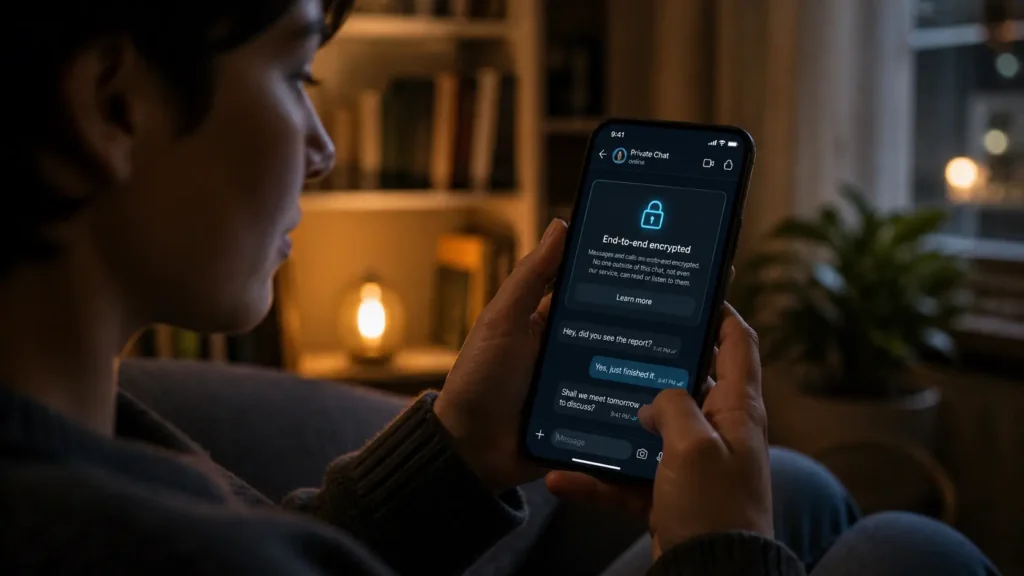
Use end-to-end encrypted messaging. Signal, iMessage, and WhatsApp cannot hand over content they do not hold. Email unless specifically encrypted is almost always accessible to your provider and therefore to any government with a legal demand.
Check compliance rates, not just transparency reports. A company that receives 100,000 requests and complies with 95% is a fundamentally different privacy partner than one that contests 40%. The numbers are in published transparency reports if you look.
Choose platforms whose business model aligns with your privacy. A company that sells your attention to advertisers and a company that sells you a device have different incentives when a government comes asking. That difference shows up in court records if you know where to find them.
Read also: 🔗 Why “Free” Apps Are the Most Expensive Thing on Your Phone — AIwala News
🔗 How Data Brokers Legally Sell Your Home Address and Daily Routine in the US — AIwala News
© AiwalaNews | Global Tech & Privacy Edition | April 2026
