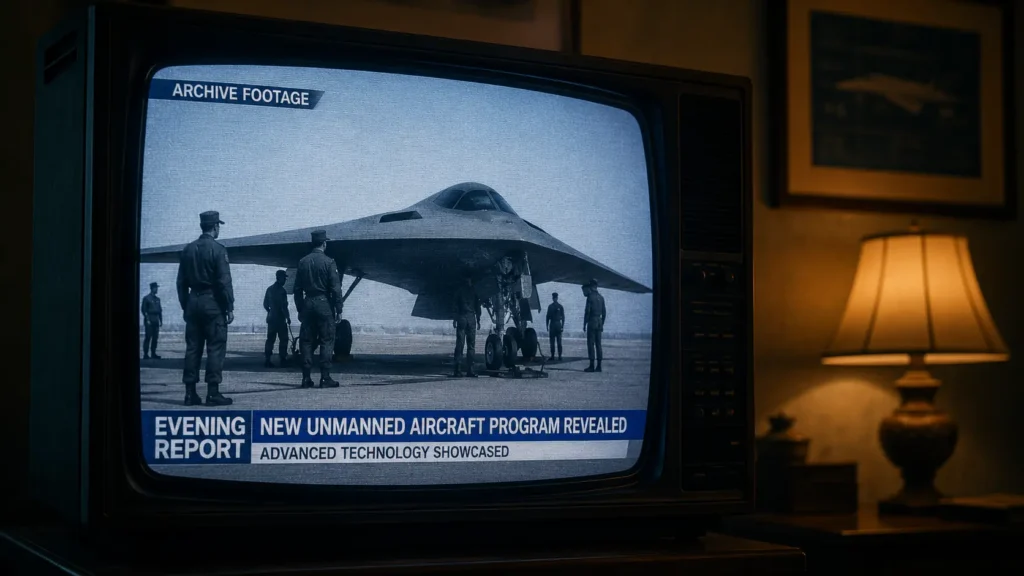
On December 8, 2011, Iranian state television broadcast something the United States had never confirmed existed in detail: a near-fully intact American stealth drone, sitting on the ground in Kashmar, in northeastern Iran. Iran announced the UAV had been brought down by its cyberwarfare unit, which claimed to have commandeered the aircraft and landed it safely directly contradicting initial Western reports that it had simply been shot down.
The aircraft was the RQ-170 Sentinel nicknamed “Wraith” by the Air Force, and “the Beast of Kandahar” by the journalists who first photographed it years earlier. President Obama later acknowledged the downed aircraft was indeed a US drone and formally asked Iran to return it. Iran refused.
Fifteen years later, the same aircraft type would resurface flying openly into headlines after a Venezuelan operation in January 2026. The story of how it works has never been officially told. The story of what it has done is, remarkably, mostly public.
The Aircraft Almost Nobody Was Supposed to See
The Lockheed Martin RQ-170 Sentinel is operated by the US Air Force on behalf of the CIA. Introduced in 2007, it was deployed to Afghanistan that same year, to South Korea by 2009, and most recently to Venezuela in 2026.
The Air Force formally acknowledged the aircraft’s existence in December 2009 but the nickname “Beast of Kandahar” stuck, after grainy images of the unusual flying-wing aircraft began appearing online years before any official statement.
An Air Force official involved with the program put the secrecy in blunt terms: “Its entire existence is predicated on, ‘Hey, we have to be able to penetrate these integrated air defence systems.’ And the more information that we put out there about its capabilities, the more we jeopardise its ability to do exactly what we need it to do.”
That single quote explains why this article cannot and should not detail the specific engineering of how stealth aircraft evade radar. The secrecy is not theatre. It is the entire operational premise.
What the Public Record Actually Confirms
Despite the secrecy, a remarkable amount has entered the public record through official disclosures, FOIA requests, and incidents the US government could not suppress.
The RQ-170 is a subsonic, jet-powered, unarmed, unmanned aircraft built for stealthy intelligence, surveillance, and reconnaissance missions. It operates in total emissions control mode collecting signals and electronic intelligence while minimising its detectability and avoiding exposure of its position.
It uses a flying-wing design, powered by a single engine. Between 20 and 30 RQ-170s were estimated to be in service with the Air Force as of 2021, operated by the 30th and 44th Reconnaissance Squadrons.
Its most consequential confirmed mission remains its earliest. The RQ-170 achieved its most significant operational success during the May 2, 2011 raid that killed Osama bin Laden the CIA used RQ-170s to monitor bin Laden’s Abbottabad compound for months before the assault, capturing high-resolution video that satellites could not provide.
The Capture That Became a Geopolitical Flashpoint
The 2011 incident remains the single event that did more to expose the programme and its limits than anything the Pentagon has disclosed voluntarily.
The RQ-170’s deliberately modest stealth features represented a calculated trade-off: designers avoided incorporating the most sensitive technologies, specifically to limit intelligence losses if the aircraft were ever captured a decision that proved prescient when Iran reverse-engineered the platform.
In April 2012, the Islamic Revolutionary Guard Corps claimed to have extracted the entirety of the data collected by the drone and stated it was building a replica. Iran went on to produce drones based on the captured aircraft, including the Shahed 171 Simorgh and the Shahed Saeqeh.
The consequences rippled far beyond Iran. That reverse-engineered platform became central to the Shahed drone family now used extensively in Russia’s war in Ukraine meaning a single captured American stealth drone, more than a decade later, indirectly shaped weapons used on a completely different battlefield.
The programme’s response was significant: two $47 million contracts were awarded shortly afterward to develop navigation alternatives for drones and missiles, specifically addressing the cyber and GPS vulnerabilities the incident exposed.
The Successor Nobody Has Officially Confirmed
The Air Force’s broader response to the RQ-170’s limitations came through a classified programme known informally as the RQ-180. Northrop Grumman won an approximately $2 billion development contract in 2008. First flight occurred at Groom Lake on August 3, 2010 at night, an unprecedented step taken specifically to preserve secrecy.
The RQ-180 represents a dramatic capability increase over its predecessor: estimated wingspan of 130 to 172 feet roughly double the RQ-170 with endurance exceeding 24 hours and range around 12,000 nautical miles.
A journalist who broke the original story on the RQ-180 in 2014 noted that the Air Force briefly confirmed its existence afterward but has said essentially nothing since. He described the RQ-170, by comparison, as less the pinnacle of stealth technology and more a gap-filler: “It fills a niche between a Reaper, which is completely non-stealth and has been shot down, and the sort of high-end capabilities, like the RQ-180.”
Out of the Shadows Venezuela, January 2026
The most recent confirmed sighting brought the programme back into public view in a way the Air Force could not control.
Air Force Gen. Dan Caine referenced the 150 aircraft used in Operation Absolute Resolve the mission to capture Venezuelan President Nicolás Maduro by name, including F-35 and F-22 fighters and a B-1 bomber. He did not specify the “remotely piloted drones” involved.
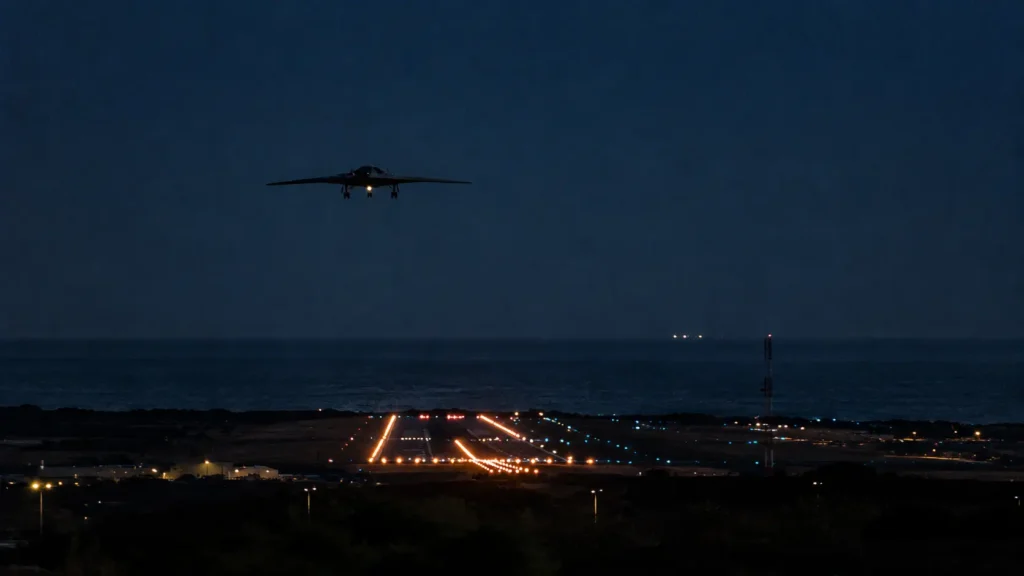
RQ-170 Sentinel stealth drones were nonetheless spotted returning to a US base in Puerto Rico after the operation a rare public sighting captured by a local resident. A defence journalist observed: “The Air Force officially acknowledged the RQ-170’s existence more than a decade and a half ago, but continues to be exceptionally tight-lipped about the Sentinel fleet. However, what is known about its operational activities to date fully aligns with the operation in Venezuela.”
Defence experts assessing the mission focused on persistent surveillance of Maduro’s residence drawing direct parallels to the sustained, covert monitoring that preceded the 2011 bin Laden raid.
What the Secrecy Actually Protects
A defence analyst summarised the logic precisely: “The RQ-170 has been used constantly in multiple combatant commands since its inception. You just never hear about it because it is such a highly classified capability.”
The programme’s value lies almost entirely in the uncertainty surrounding it what it can detect, how it avoids detection, where it has flown, and what comes next. Iran’s 2011 capture proved that even the most secretive platforms are not invulnerable. It also proved, by design, that even total compromise of one aircraft did not compromise the programme’s most sensitive techniques because those techniques were deliberately kept out of that specific airframe.
Nearly fifteen years and one successor programme later, the aircraft remains, by design, mostly unseen until, occasionally, it isn’t.
📌 Read Also:
- Why the US Government Just Banned This Chinese App’s Core Technology
- The Technology That Prevents Two Airplanes From Crashing Mid-Air
© AiwalaNews | Global Tech & Privacy Edition | April 2026
