Open any financial news site today and the headlines sound reassuring. GDP is growing. The stock market is near record highs. Consumer spending is up. On paper, everything looks fine.
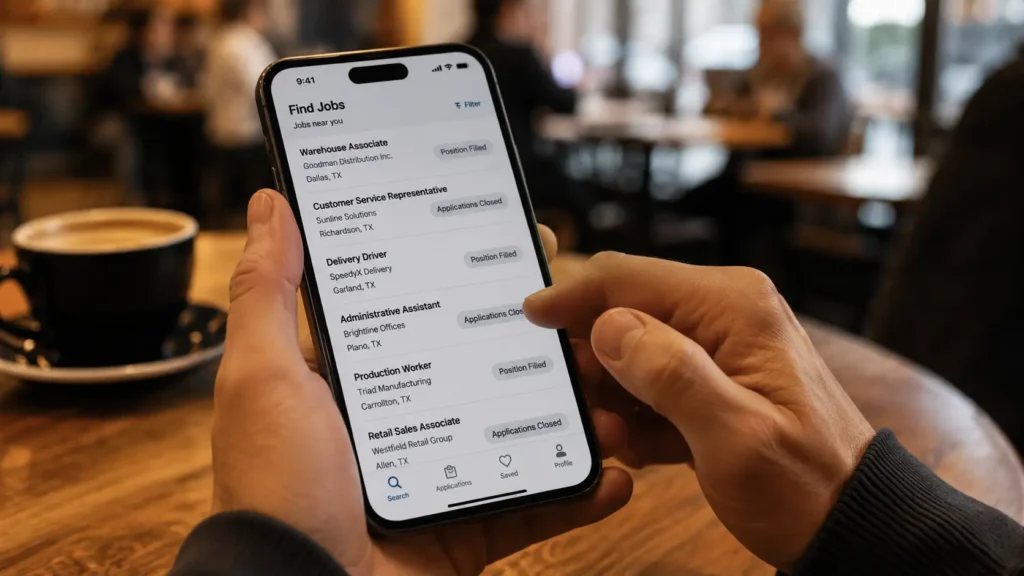
But ask a real American a teacher in Ohio, a small business owner in Texas, a nurse in Florida and you’ll hear something very different. Grocery bills that feel impossible. Credit card debt that keeps climbing. A creeping anxiety about job security that wasn’t there two years ago.
By the textbook definition, there is no recession: GDP is growing and the stock market is up. But there isn’t one American economy right now — there are two.
That gap between the official numbers and everyday reality? That’s the quiet recession. And it’s already here for millions of households.
What the Data Is Actually Telling Us
The signals are there you just have to know where to look.
The U.S. economy lost 92,000 jobs in February 2026, despite forecasters expecting a gain of 59,000. Jobs growth has now turned negative in five of the last nine months and has slowed essentially to a standstill since January of last year.
Americans are very concerned about the economy in general and the job market in particular. Unemployment climbed from 4.0% to 4.4%, and inflation jumped from 2.2% to 2.8% both measurably worse than 2025. The unemployment rate for Americans aged 16–24 has been above 10% and rising for six consecutive months.
Banks are also tightening lending standards a historically reliable early warning sign. The Federal Reserve’s quarterly survey found stricter standards for commercial and industrial loans for businesses of all sizes, alongside weaker demand for several forms of household credit.
And yet, most major financial outlets are framing this as a “slowdown” rather than a recession. Which is exactly the problem.
Why Nobody’s Saying the “R” Word Out Loud
The economy is literally moving at two speeds with businesses and affluent households stimulating growth, fueled by AI spending and record asset prices, while the average person is increasingly anxious and financially exhausted.
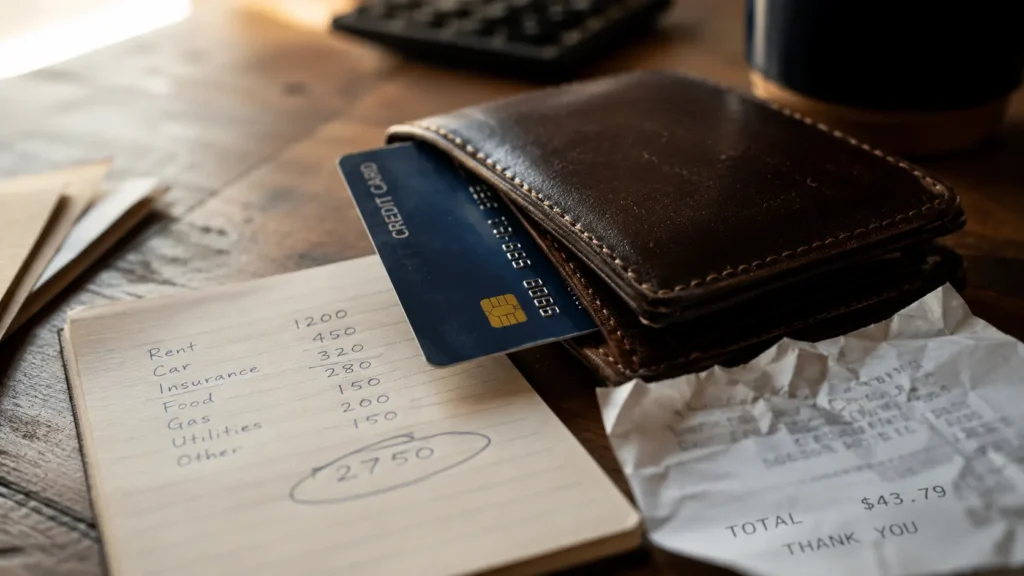
When wealthy households and large corporations keep spending, the headline GDP numbers stay positive. But that doesn’t mean the family earning $65,000 a year isn’t quietly drowning under rent increases, car payments, and a credit card balance they can’t seem to get rid of.
Legendary economist Gary Shilling has warned of a 2026 economic collapse driven by frozen housing, plummeting capital expenditures, and weak consumers. He describes the average American consumer as being “on very thin ice in terms of income and willingness to spend.”
The quiet recession doesn’t announce itself with a dramatic market crash. It arrives slowly in the form of fewer job openings, rising credit card defaults, and the quiet decision millions of Americans are making to stop going out to dinner as often.
The 5 Warning Signs Already Showing Up in Your Household
You don’t need an economics degree to spot these:
1. Your paycheck feels smaller even though nothing changed. That’s real-wage erosion. Inflation and weak income growth have combined to make affordability worse and it’s increasingly a function of a weak job market rather than just high prices.
2. You’re leaning on credit more than you used to. A 2025 Bankrate survey found that 60% of Americans are uncomfortable with their level of emergency savings. When savings run thin, credit cards fill the gap and that gap is widening.
3. Job hunting feels harder than it should. The days of easy job offers and signing bonuses are gone. A low-hire, low-fire job market is placing heavy strain on young workers and anyone who loses a job making re-entry slower and more competitive than at any point in recent years.
4. You’re delaying major purchases. New car. Home renovation. That family vacation. If you’ve been quietly postponing these, you’re not alone and you’re not wrong.
5. Your gut says something is off. Economic anxiety is real data. Consumer confidence surveys consistently show Americans feel worse about the economy than the official numbers suggest. Trust that instinct.

What Smart Americans Are Doing Right Now
Here’s the part that actually matters what you can do about it.
Build a 6–9 month emergency fund not 3. In today’s unpredictable economy, financial experts recommend aiming for at least six to nine months’ worth of expenses. If you lose your job, that buffer buys you time to find not just a new job but the right one.
Diversify your income before you need to. Relying solely on a full-time job for income can feel increasingly uncertain. Side hustles like freelancing in your area of expertise, tutoring, or renting out a spare room can generate additional income and provide meaningful financial stability during uncertain times.
Attack high-interest debt aggressively. Pay down high-interest debt first especially credit card debt. Reducing these balances lowers monthly obligations and frees up cash flow, which becomes critical if your income drops or rates rise further.
Stay invested but invest smarter. The worst move is often sitting on the sidelines, as the biggest market gains typically occur while economic news is still terrible. Smart strategies include income-generating investments like government-backed securities, alongside global investments, commodities, and alternatives.
Create your “flip-on-in-24-hours” cut list. Identify 10 cuts you can activate within 24 hours pausing subscriptions, lowering streaming tiers, negotiating insurance, reducing dining out to once a week, or switching to store brands for a month. Put the estimated monthly savings next to each item and circle the easiest three to start today.
The Bottom Line
The quiet recession won’t make the front page the same way a stock market crash would. It moves slowly, squeezes quietly, and hits the middle class hardest — long before any official declaration is made.
As of June 2026, a full-blown recession is not necessarily on the horizon but the data suggests a slowdown is a real and present risk. The outcome will depend on whether top-heavy spending can continue to overcome broader economic vulnerabilities.
The Americans who will come out ahead aren’t the ones waiting for permission to prepare. They’re the ones who already started.
The question is: which group are you in?
Read Also:
- 🔗 AI Is Replacing These 11 White-Collar Jobs in 2026 — Is Yours on the List?
- 🔗 The Airbnb Strategy Americans Are Using to Make $8,000 During World Cup 2026
© AiwalaNews | Global Tech & Privacy Edition | June 2026
