
There’s a moment every person has, usually about 20 minutes after setting up a new phone. You’re scrolling through your apps and you see it a folder full of things you never installed, never wanted, and can’t figure out how to delete. A carrier app. A brand’s own browser. A digital wallet tied to their ecosystem. A notes app that syncs to their cloud.
Welcome to bloatware and the quiet business model behind every phone you’ve ever bought.
Here’s what phone manufacturers don’t advertise on the box: many of those pre-installed apps exist not to help you, but to keep you inside their ecosystem, generate licensing revenue from third-party app partnerships, and collect behavioral data that’s worth far more than the apps themselves. Manufacturers like Xiaomi, OnePlus, Samsung, and OPPO load their devices with apps that range from redundant to genuinely intrusive and even flagship devices costing over $1,000 aren’t immune.
The good news? For almost every default app on your phone, there’s a better, cleaner, more privacy-respecting alternative. You just have to know where to look.
The Browser: Stop Using What They Gave You
Whether it’s Safari on iPhone or Samsung Internet on Galaxy, your default browser is one of the highest-value pieces of software on your device and manufacturers know it. Every search, every URL typed, every site visited feeds data back into ecosystems designed to monetize your attention.
Brave Browser is the single biggest upgrade most people can make right now. It blocks ads and trackers at the network level before pages even load which also makes it noticeably faster than Chrome or Safari on the same connection. It doesn’t sell your browsing data to anyone. For users who want Mozilla’s independence from Big Tech, Firefox remains a strong cross-platform alternative with robust anti-tracking built in. Firefox is regarded as one of the strongest choices for users who need a cross-platform browser that’s more private than Safari.
The manufacturer doesn’t want you using these because they lose the data trail your browsing creates.
The Keyboard: It’s Probably Reading Everything You Type
This one surprises people. Your phone’s default keyboard whether it’s Gboard on Android or the stock iOS keyboard has network access. It sends telemetry. It learns from what you type, and that learning doesn’t stay entirely on your device.
SwiftKey (Microsoft) and Fleksy are cleaner alternatives, but the real privacy move in 2026 is Typewise an AI keyboard that processes everything locally, on your device, with no data leaving your phone. It’s not flashy. It’s just honest.
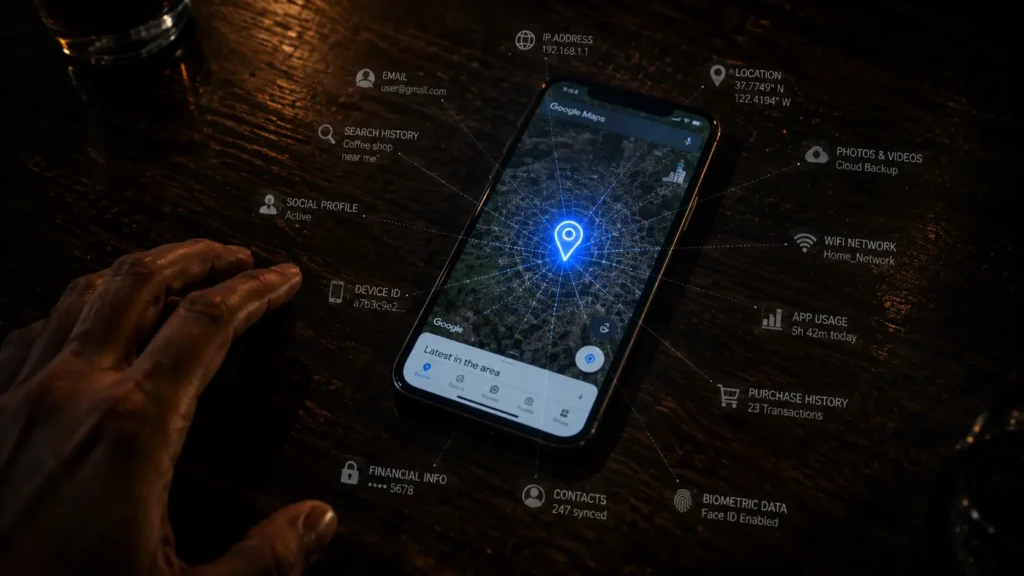
Maps & Navigation: Google Knows Where You Sleep
Google Maps is genuinely excellent. It’s also one of the most comprehensive location-tracking systems ever built. Google was caught in 2018 continuing to track user locations even after users had explicitly turned off their location history using a hidden feature called Web & App Activity that most people never knew existed. That business model hasn’t fundamentally changed.
For everyday navigation, Organic Maps is the alternative that deserves far more attention than it gets. It’s built on OpenStreetMap data, works fully offline, stores nothing on their servers, and doesn’t serve a single ad. For commuters relying on public transit, Citymapper is excellent it has a detailed privacy policy stating that user data is not shared or sold to third-party advertisers.
OsmAnd is another strong pick, especially for anyone who travels or goes off-grid download your maps in advance and navigate without touching mobile data at all.
Notes & Productivity: Your Thoughts Aren’t as Private as You Think
Apple Notes syncs to iCloud. Samsung Notes syncs to Samsung Cloud. Google Keep sits inside Google’s data ecosystem. Every note you write, every list you make, every idea you jot down at 2am it lives on someone else’s server.
Obsidian stores everything locally on your device in plain text files you own completely. No cloud unless you choose it. No subscription required for the core app. It’s become the tool of choice for writers, researchers, and anyone serious about owning their own data. For lighter use, Notion and Bear (iOS/Mac) offer beautiful interfaces with more transparency about data handling than native apps provide. Apps like Joplin and UpNote also offer strong privacy settings, offline access, and cross-platform support features the default notes apps deliberately underplay.
The App Store Itself: Yes, Even That
This one’s bigger than most people realize. Both the Apple App Store and Google Play Store take a 15–30% cut of every purchase and subscription made through apps on your phone. They also curate what you can and can’t install. Developers pay to play by their rules.
On Android, F-Droid is an entirely open-source app repository containing hundreds of apps that are free, ad-free, and tracker-free apps that would never appear in the Play Store because they can’t be monetized in the traditional way. It won’t replace Google Play entirely, but it’s where privacy-first tools like Fennec (Firefox fork), NewPipe (YouTube without ads or tracking), and Signal live freely.
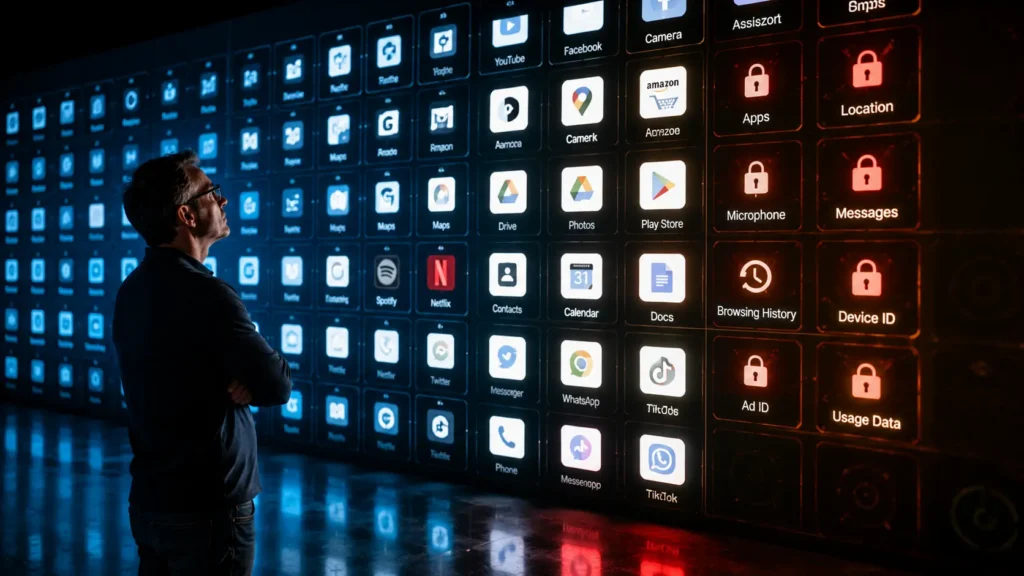
The Camera App: More Than Just a Shutter Button
Your stock camera app does more than take photos. Many popular apps collect more information than most people realize and the camera is no exception. On Samsung devices, photos are tagged with detailed metadata. On some Android skins, the camera app has permissions that feel broader than taking a picture should require.
Open Camera on Android is a fully open-source replacement that gives you granular manual controls and strips out the telemetry. For iPhone users who want more creative control, Halide Mark III is the gold standard built by two independent developers who have been transparent about what the app does and doesn’t collect.
Why Manufacturers Make It Difficult to Switch
Using a Samsung phone, for instance, can feel like indulging a CEO’s deep desire to copy Apple’s walled garden the difference being that Apple’s ecosystem lock-in is at least built on a proprietary OS, while Samsung is layering ecosystem control on top of Android, which was supposed to be the open alternative.
The real issue isn’t just that these apps exist it’s that many of them can’t be uninstalled without rooting the device, requiring technical knowledge most users don’t have and don’t want. Disabling an app leaves its files on your phone. It can still receive background updates. On some devices, it can still phone home.
The business model is simple: your phone isn’t just a device. It’s a distribution platform. Every default app is a revenue relationship between the manufacturer and Google, between the manufacturer and Microsoft (Samsung ships LinkedIn and Office on Galaxy flagships), between the carrier and whoever paid for that folder you’ll never open.
The Quick Swap List
| Default App | Better Alternative | Why Switch |
|---|---|---|
| Safari / Samsung Browser | Brave or Firefox | No tracking, faster loading |
| Google Maps | Organic Maps or OsmAnd | Full offline, zero data harvesting |
| Stock Keyboard | Typewise | On-device AI, no data leaves phone |
| Apple Notes / Samsung Notes | Obsidian or Bear | Local storage, you own your data |
| Stock Camera | Halide (iOS) / Open Camera (Android) | More control, less telemetry |
| Google Play (Android) | F-Droid (supplement) | Open-source, ad-free apps |
None of this requires rooting your phone or becoming a privacy extremist. It just requires knowing that the apps already on your phone were put there for someone else’s benefit and that better options have existed for years.
Your phone is expensive. It should work for you.
📖 Read Also:
- What Happens Inside a Data Center When You Hit “Send” on an Email
- How Google Decides What Shows Up First in Search – The Algorithm Nobody Fully Understands
© AiwalaNews | Global Tech & Privacy Edition | April 2026
